Views: 0 Author: Site Editor Publish Time: 2026-10-26 Origin: Site


Does 95% ethanol purity automatically make alcohol suitable for food production? Not necessarily.
Food grade ethanol 95 requires more than a stated alcohol concentration. Impurity limits, denaturant status, and quality testing also matter. This guide explains purity standards, testing methods, and essential checks for food manufacturers.
Food grade ethanol 95 generally refers to ethanol containing approximately 95% alcohol, commonly measured by volume. However, the concentration must be clearly specified. The remaining portion primarily consists of water, potentially alongside trace impurities. Food-grade suitability depends on additional purity requirements, applicable regulations, and the intended use.
A 95% ethanol concentration describes how much ethyl alcohol is present in the solution. When expressed as 95% alcohol by volume, it indicates an ethanol content equivalent to 95 volume units of pure ethanol per 100 volume units of final solution, at the specified reference temperature. It does not mean the remaining 5% contains only water under every circumstance.
This distinction matters because ethanol produced through fermentation and distillation may contain trace compounds. Their concentrations depend on raw materials, production methods, purification, and storage. These substances must be evaluated against applicable food grade ethanol impurity limits.
Commercial product descriptions sometimes use purity, concentration, and grade interchangeably. These terms describe different aspects of product quality. Concentration measures ethanol content, while grade reflects conformity to defined specifications and intended-use requirements.
For buyers, the important question is whether the supplied product meets a documented 95 ethanol purity specification. Its analytical results should identify the concentration, measurement basis, and relevant acceptance limits.
Food manufacturers should also distinguish nominal purity from actual batch results. A product advertised as 95% ethanol should have supporting documentation showing its measured concentration falls within the agreed specification.
Ethanol concentration can be expressed as alcohol by volume (ABV) or alcohol by weight (ABW). These measurements are not interchangeable because ethanol and water have different densities.
Alcohol by volume describes the proportion of ethanol relative to the final solution volume. Alcohol by weight describes its mass relative to the total solution mass. Consequently, 95% v/v does not equal 95% w/w.
Temperature also affects volumetric measurements. Ethanol-water mixtures change density as temperature varies. Accurate concentration reporting therefore requires suitable reference conditions and appropriate temperature corrections.
For purchasing departments, a specification stating only "95% purity" may be incomplete. The supplier should explain whether the concentration is expressed by volume or mass. This becomes especially important when comparing quotations or reviewing production formulas.
Manufacturers should use consistent measurement units when calculating ingredient quantities. Mixing volume-based and mass-based concentrations without conversion can create formulation errors.
Tip: Always confirm whether 95% ethanol is specified as v/v or w/w before comparing supplier quotations.
The United States proof system expresses alcohol concentration as twice the alcohol percentage by volume. Therefore, 95% ethanol by volume corresponds to 190 proof.
The conversion is straightforward:
Alcohol Proof = Alcohol by Volume (%) × 2
190 Proof = 95% ABV × 2
This relationship is recognized by the U.S. Alcohol and Tobacco Tax and Trade Bureau (TTB).
However, proof describes alcohol strength rather than food-grade compliance. A 190-proof product may still contain unsuitable impurities or added denaturants.
Manufacturers should not rely on proof alone when assessing ethanol quality. It should be considered alongside the supplier's chemical specifications and intended-use declarations.
The proof system is particularly relevant when reviewing United States product documentation. In international trade, suppliers may instead express concentration as a percentage by volume or weight.
For consistent purchasing decisions, buyers should request a clear statement of concentration and the applicable measurement conditions.
No. A 95% ethanol assay alone does not establish food-grade compliance. Industrial and food-grade products can have similar ethanol concentrations while meeting different specifications.
Food-grade assessment requires consideration of product identity, impurity levels, manufacturing practices, and intended use. Depending on the destination market, additional regulatory requirements may apply.
For example, the United States FDA identifies ethyl alcohol in its food substance inventory for several technical functions. However, specific uses remain subject to the applicable regulatory provisions. Under the current 21 CFR 184.1293, the stated GRAS affirmation covers a defined antimicrobial use on pizza crusts before final baking. It should not be interpreted as blanket authorization for every food application.
Industrial ethanol may contain impurities or additives unsuitable for food processing. Some grades may also be deliberately denatured.
Manufacturers should therefore verify both analytical quality and permitted use before incorporating ethanol into food products.
Although water is the main additional component in an ethanol-water solution, other substances may be present at trace levels. Their identity and concentration depend partly on the production and purification processes.
Potential ethanol impurities include methanol, acetaldehyde, and certain higher alcohols. Additional substances may be relevant under specific analytical standards. Their presence should be evaluated against applicable acceptance criteria.
Methanol deserves particular attention because it presents significant toxicity concerns. Even when a product meets its stated ethanol concentration, excessive methanol can make it unsuitable for its intended application.
Buyers should not assume that clear appearance or neutral odor proves purity. Many chemical impurities require instrumental analysis for reliable identification.
A suitable certificate of analysis should document the required impurity tests. Testing methods must provide enough sensitivity to demonstrate conformity with the relevant specification.
Manufacturers should also consider contamination introduced during storage or handling. Appropriate containers and hygienic transfer systems help maintain the quality established during production.
Food-grade ethanol specifications help establish measurable criteria for product identity and purity. The Food Chemicals Codex (FCC) provides recognized specifications for various food ingredients, including ethyl alcohol.
A relevant specification may address chemical identity, ethanol assay, impurities, and analytical methods. The exact requirements depend on the standard and edition being applied.
In the United States, 21 CFR 184.1293 incorporates a specified edition of the FCC monograph by reference. Buyers should distinguish this legally incorporated edition from later FCC revisions and separately applicable requirements.
Suppliers should identify the standard their product is claimed to meet. A certificate of analysis should then report results against appropriate acceptance limits.
Manufacturers sourcing Edible Alcohol can review available product options before requesting batch-specific purity documentation.
A supplier's product category provides useful introductory information, but it does not replace independent verification of a shipment.
Tip: Request the applicable specification and recent batch test results before approving a food-grade ethanol supplier.
Food grade ethanol purity requirements extend beyond alcohol concentration. Technical standards establish how products should be identified, measured, and evaluated. Buyers should determine which requirements apply to their destination market and intended application.
The Food Chemicals Codex provides ingredient identity and purity specifications used in food ingredient evaluations. Its ethyl alcohol monograph addresses criteria relevant to verifying the identity and quality of ethanol.
Manufacturers can use applicable FCC requirements when developing incoming material specifications. These requirements help clarify which tests and acceptance limits should appear in supplier documentation.
However, an FCC reference should be interpreted carefully. Different monograph editions may contain different testing provisions. Regulatory incorporation of an older edition does not automatically mean every newer revision has the same legal status.
Purchasing teams should therefore identify the exact standard required for their application. Where compliance involves several markets, separate assessments may be necessary.
A product claiming FCC conformity should be supported by suitable analytical evidence. The supplier should confirm that the tested material matches the grade being purchased.
Methanol is an important impurity in ethanol quality assessment. Excessive exposure can cause severe health effects, making reliable identification and control essential.
In October 2020, the FCC announced a revision to its Ethyl Alcohol monograph. The revision introduced a required quantitative methanol test and a limit of not more than 200 ppm, effective November 1, 2020.
This historical FCC requirement provides a useful technical reference. However, buyers should verify the currently applicable specification before treating any numerical limit as sufficient for compliance.
Methanol testing generally requires appropriate analytical methods and validated procedures. Gas chromatography is frequently used to separate and measure volatile chemical components.
Manufacturers should review measured results rather than relying on broad statements such as low methanol or high purity.
A supplier should also explain how nonconforming batches are identified and prevented from entering food ingredient distribution.
Documentation connects product claims to measurable quality evidence. The most important records typically include the product specification and a batch-specific certificate of analysis.
The specification identifies acceptance criteria. The certificate of analysis reports results for the actual production batch. Together, they help buyers determine whether the material meets agreed requirements.
Other documents may include a safety data sheet, manufacturing information, and relevant compliance declarations. These records serve different purposes and should not be treated as substitutes for analytical testing.
For example, a safety data sheet provides hazard and handling information. It does not necessarily establish suitability for a specific food application.
Buyers should also verify lot numbers and document dates. Inconsistent identification can create problems during traceability investigations.
Tip: A food-grade claim is not equivalent to analytical certification. Verify the actual batch against the required specification.
Accurate ethanol testing helps manufacturers confirm product strength and identify unacceptable impurities. The chosen methods must match the required analytical results. Consistent sampling, calibration, and documentation also contribute to reliable measurements.
Ethanol concentration can be measured using density-based techniques or appropriate instrumental analysis. Common approaches include calibrated alcohol density measurements and laboratory methods suited to the product matrix.
Density testing relies on the relationship between ethanol concentration, water content, and solution density. However, other dissolved or volatile substances can affect results. A suitable measurement method should account for possible interference.
Temperature is another important factor because ethanol-water mixture density changes with temperature. Instruments must be calibrated and results corrected according to the selected analytical procedure.
Gas chromatography may also be used for quantitative ethanol determination where properly validated. The appropriate method depends on the specification and required accuracy.
Food manufacturers should confirm whether the reported assay represents volume percentage or mass percentage.
Gas chromatography separates volatile substances based on their interactions with the analytical system. This allows laboratories to identify and quantify selected compounds within an ethanol sample.
The technique can support testing for methanol, acetaldehyde, and other relevant volatile impurities. However, each method must be validated for its intended analytes and concentration ranges.
Laboratories use calibration standards to relate instrument responses to known concentrations. Appropriate quality controls help confirm that the procedure remains reliable.
A result below an instrument's detection limit should not automatically be reported as absolute absence. Laboratories should distinguish between detection limits and quantification limits.
Manufacturers should ensure the testing method provides sufficient sensitivity for the required impurity limits.
A food grade ethanol certificate of analysis should identify the supplied material and its corresponding production batch. It should also state applicable specifications, test results, and relevant analytical methods.
Buyers should compare measured values with defined acceptance criteria. A reported ethanol concentration is only meaningful when its measurement basis is clear.
For impurity testing, the document should identify each required substance and its measured value or appropriate reporting limit.
If the certificate contains missing results or unclear units, purchasing teams should request clarification before approving the material.
The following table illustrates the information worth checking.
COA Item | What Buyers Should Verify |
|---|---|
Product identity | Ethanol, CAS 64-17-5 |
Ethanol assay | Result, units, and acceptance range |
Concentration basis | % v/v or % w/w |
Methanol | Result against applicable limit |
Other impurities | Required tests and acceptance criteria |
Batch number | Matches delivered product |
Test method | Appropriate and documented |
Denaturant status | Confirmed for intended food use |
Tip: Compare certificates using matching analytical methods and concentration units. Otherwise, apparent differences may be misleading.
Ethanol products are commercially available at several concentrations and quality grades. A higher alcohol percentage does not automatically indicate better food suitability. Buyers need to compare both concentration and applicable quality specifications.
The primary distinction between 95% and 96% ethanol is their stated alcohol concentration. When both values use the same volume basis, the 96% product contains slightly more ethanol per unit of final solution.
The difference can affect formulation calculations and solvent composition. However, it does not establish which product has better impurity control or food-grade quality.
Both concentrations should be evaluated against the same intended-use requirements. Buyers should request separate specifications and certificates for each grade.
Xinrui Group lists an Ethyl Alcohol Ethanol 95 96 Superior Grade product. Its public description identifies 95% and 96% variants, although actual batch specifications should be confirmed directly.
Manufacturers should select the concentration that meets their processing requirements and applicable regulations.
Ethanol marketed at 99% concentration contains less water than a comparable 95% product when both use the same measurement basis. This difference may influence solvent performance and suitability for moisture-sensitive processes.
However, producing higher-concentration ethanol often requires additional dehydration beyond conventional ethanol-water distillation. The selected production method can influence processing costs and technical specifications.
A 99% industrial ethanol product should not automatically replace 95% food-grade ethanol. Its higher assay provides no guarantee of appropriate impurity limits or food-use authorization.
For food processing, the necessary concentration depends on the specific manufacturing application. Buyers should review technical requirements rather than assume that higher purity always delivers better results.
Industrial-grade and food-grade ethanol may share the same chemical identity and nominal concentration. Their suitability differs according to manufacturing controls, impurity specifications, additives, and intended applications.
Industrial ethanol may be manufactured for coatings, fuels, chemical processing, or other technical uses. Such products may not be tested or documented against the requirements relevant to food manufacturing.
A supplier describing ethanol as industrial grade should not be assumed to provide food-grade material without further verification.
Manufacturers must establish that the actual product satisfies applicable food ingredient requirements. This involves reviewing analytical results, manufacturing information, and denaturant status.
Concentration alone cannot resolve these differences.
Denatured ethanol contains substances deliberately added to make the alcohol unsuitable for beverage consumption or to satisfy particular industrial requirements. The type and concentration of denaturants depend on the product and applicable regulations.
Denatured ethanol should not be substituted for ethanol intended as a food ingredient. Its additives may introduce unacceptable chemical exposure or violate food ingredient requirements.
This distinction is especially important when reviewing online supplier descriptions. One reference listing combines food-grade terminology with denatured ethanol and disinfection applications. Its product details also describe concentrations different from those emphasized in its title. Such mixed descriptions require clarification before purchasing.
Buyers should explicitly request confirmation that ethanol intended for food use is appropriately undenatured. They should also verify the complete ingredient and additive information.
Tip: Never interpret concentration or marketing terminology as proof that denatured alcohol is suitable for food use.
Ethanol concentration and impurity control influence the performance of certain food manufacturing processes. Suitable food-grade ethanol may function as a solvent, extraction medium, or processing ingredient where permitted. Its quality must match the intended application.
Ethanol is used in certain extraction processes because it can dissolve a range of chemical compounds. Adding water changes the polarity and behavior of the solvent mixture.
Consequently, ethanol concentration can influence the extraction of flavor compounds and other food constituents. Different materials respond differently to changes in solvent composition.
A 95% ethanol solution may be appropriate for some extraction applications. Other processes may require a different ethanol-water ratio.
Manufacturers should establish solvent specifications through application testing and applicable food safety requirements.
Impurity control also matters because unintended substances may enter the extracted material. Food-grade verification supports more predictable processing and finished-product quality.
Ethanol can act as a solvent or carrier for suitable flavor ingredients. It helps dissolve certain compounds and can support consistent ingredient distribution during manufacturing.
Its concentration affects solvent composition and may influence extraction behavior. Manufacturers should therefore control alcohol strength according to their approved formulations.
Purity matters because unwanted volatile impurities could affect sensory characteristics. Even small amounts of certain compounds may introduce undesirable odors or flavors.
Suitable specifications and controlled storage help maintain material consistency.
However, permitted use varies by jurisdiction and application. Food manufacturers must confirm that the specific ethanol grade meets all relevant requirements.
Impurities can influence product safety, sensory quality, and regulatory compliance. Their effects depend on chemical identity, concentration, and potential exposure.
Some volatile compounds may affect odor or taste. Others present more significant toxicological concerns.
Methanol is a particularly important example because of its toxicity. Manufacturers must ensure that their ethanol meets relevant impurity specifications.
Contamination may also occur during transfer or storage. Dedicated equipment and suitable packaging help reduce this risk.
Consistent incoming material testing supports finished-product quality and reduces the likelihood of processing interruptions.
Tip: Establish ethanol purity specifications according to the actual food application, not simply the highest available concentration.
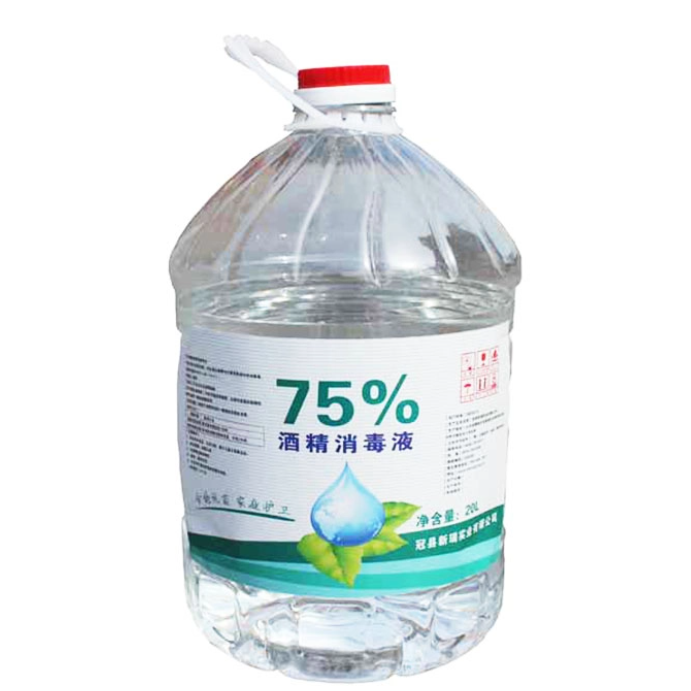
Buying food grade ethanol 95 requires more than checking its advertised concentration. Purchasing and quality teams should examine the product specification, analytical documentation, denaturant status, and supplier consistency.
Begin by confirming the product identity and nominal concentration. The specification should clearly state whether purity is measured by volume or weight.
Next, review the applicable impurity limits and analytical methods. Important parameters may include methanol and other specified volatile compounds.
Buyers should also confirm the intended food application and applicable regulatory requirements. The same ethanol concentration may be sold under several commercial grades.
Supplier descriptions should not replace formal technical records. A clearly defined specification provides the basis for objective acceptance decisions.
When information is incomplete, buyers should request written clarification before placing an order.
A qualified supplier should provide documentation appropriate to the intended food application. This commonly includes product specifications, batch certificates of analysis, and relevant safety information.
The certificate should identify the tested batch and report required analytical results. The safety data sheet should address handling, storage, and hazard information.
Manufacturers may also request information about traceability, packaging materials, and relevant management systems.
Documentation should be current, internally consistent, and applicable to the supplied grade.
Food manufacturers should retain these records within their supplier qualification systems. This supports later inspections and investigations.
Supplier comparison should begin with technical suitability rather than price alone. Buyers should establish a consistent specification before evaluating competing quotations.
Each supplier should demonstrate the required ethanol concentration, impurity controls, and appropriate product documentation.
Batch consistency also deserves attention. Repeated analytical results can provide information about production reliability and quality management.
Packaging and transportation arrangements should protect product integrity. Buyers should confirm that containers are suitable for ethanol and the intended food ingredient supply chain.
Xinrui Group maintains an industrial and food ingredient product portfolio, including its edible alcohol category. Purchasing teams can use product information as an initial reference before requesting formal technical documentation.
Representative sample testing can provide further confidence before larger procurement commitments.
Before use, manufacturers should confirm the material's identity, measured concentration, and compliance with the applicable specification.
The product must also be suitable for the intended food application. This includes evaluating whether its use is permitted under relevant destination-market regulations.
Denaturant status requires explicit verification. Alcohol containing unsuitable denaturing agents should not enter food ingredient formulations.
Manufacturers should review packaging condition, delivery documentation, and lot traceability when receiving the material.
Incoming inspection should identify any unusual appearance, damaged containers, or inconsistent documentation.
Once approved, ethanol should be stored and handled according to appropriate safety procedures.
Tip: Include purity, impurity limits, denaturant status, and intended-use requirements in every purchasing specification.
Even correctly specified ethanol can produce unexpected test results or quality concerns. Differences may arise from analytical methods, storage conditions, contamination, or documentation errors. A systematic investigation helps identify the cause.
Unexpected assay results may result from differences in concentration units or testing methods. Temperature variation can also affect density-based alcohol measurements.
For example, a supplier may report alcohol by volume while another document uses mass percentage. Comparing these values directly can create a false impression of nonconformity.
Sampling conditions and instrument calibration may introduce additional variation.
Manufacturers should first verify the measurement basis and analytical method. They should then review calibration records and sampling procedures.
If the difference remains unexplained, an appropriately qualified laboratory can repeat the measurement.
An ethanol batch exceeding its applicable impurity limits should not be released for the intended food use.
Excessive impurities may present safety concerns or affect finished-product characteristics. The actual consequences depend on the substances involved.
Manufacturers should isolate questionable material and investigate the results. They should not attempt to approve it based solely on a satisfactory ethanol concentration.
Additional testing may be necessary to verify the initial finding. Supplier communication and documented corrective actions can support the investigation.
Material should only be released when its suitability is established under the applicable requirements.
Ethanol is volatile and flammable, making suitable storage essential. Containers should remain tightly sealed and compatible with the product.
Poor sealing may allow evaporation, while inappropriate storage arrangements can introduce contamination or moisture.
Such changes may affect concentration or product integrity. However, the direction and extent of any concentration change depend on the actual conditions.
Manufacturers should inspect packaging before use and maintain suitable inventory controls.
Storage areas must also meet applicable fire safety requirements. Appropriate ventilation, ignition-source controls, and safe transfer equipment are important.
Tip: Store ethanol in suitable closed containers and follow applicable flammable-liquid handling requirements.
Food grade ethanol 95 generally identifies a product with a nominal ethanol concentration of 95%. However, actual batch results may vary within the agreed specification.
The concentration must also identify its measurement basis. A stated value of 95% v/v differs from 95% w/w.
Buyers should review the certificate of analysis before assuming the exact concentration.
No. A concentration of 190 proof indicates 95% alcohol by volume under the U.S. proof system.
It does not verify impurity levels, denaturant status, or permitted food use.
Buyers should assess product specifications and supporting analytical documentation before approving the material.
Industrial ethanol should not be used as a food ingredient without establishing its suitability for the intended food application.
A 95% ethanol concentration alone provides insufficient evidence of compliance.
Manufacturers must verify the product's impurity specifications, denaturant status, and applicable regulatory requirements.
Review the product specification and batch-specific certificate of analysis. Confirm the ethanol assay, concentration units, required impurity results, and applicable acceptance limits.
Ask the supplier to clarify missing or inconsistent information.
Independent laboratory testing may provide additional verification when necessary.
Food grade ethanol 95 generally contains 95% ethanol, commonly measured by volume. However, concentration alone cannot confirm food-grade compliance. Impurity testing, denaturant verification, and quality documentation help manufacturers ensure product suitability.
Xinrui Group offers edible alcohol products, including 95% and 96% ethanol grades. Its product options help food manufacturers select suitable ingredients for their processing needs. Buyers should verify batch specifications before use.
A: Food grade ethanol 95 contains nominally 95% ethanol, commonly measured by volume.
A: Ethanol assay and impurity testing verify concentration and compliance.
A: A certificate of analysis documents purity and impurity results.
A: Pricing depends on testing, specifications, and supply conditions.
A: It meets verified food-use requirements.
A: Isolate the batch and investigate results.

 English
 简体中文