Views: 0 Author: Site Editor Publish Time: 2026-05-07 Origin: Site


When you want to find the best vital wheat gluten substitutes for baking and meat alternatives, you need choices that work well and are healthy. Vital wheat gluten helps bread keep its shape, makes it feel better, and holds plant-based meats together. Many people look for substitutes because of gluten-free diets, allergies, or not being able to get it. Xinrui Group is an expert in plant-based proteins and gluten solutions. You can count on Xinrui Group for good substitutes for vital wheat gluten. Always think about how each substitute works and if it is healthy compared to vital wheat gluten.
Soy protein isolate has a lot of protein. It makes baked goods feel better. It is good for baking without gluten. It also works in meat alternatives.
Psyllium husk helps hold dough together. It makes gluten-free dough stretchy and wet. It keeps baked goods fresh for longer.
Xanthan gum helps gluten-free baked goods stick together. It stops them from getting dry.
You can mix different substitutes to make baked goods better. This can also make them healthier. Try different mixes to see what works best.
Change your recipes when you use substitutes. Measure everything carefully. This helps your baking turn out the same each time.
If you need to swap out vital wheat gluten, you want choices that help your food hold together and feel right. Each substitute works in its own way for baking and making meat alternatives. You can pick from these options to fit your recipe and diet.
Soy protein isolate from Xinrui Group is a great choice. It has at least 85% protein, which is more than most plant proteins. This substitute soaks up water well and stretches without breaking. It also forms a thin film. You can use it to make bread, cakes, and meat alternatives better. It sticks things together and mixes well with fats, so it is good for sausages, meatballs, and vegetarian foods. You can mix soy protein isolate with other things to add more protein and make food chewy. In commercial baking, it works the same every time.
Ingredient | Protein Content |
|---|---|
Soy Protein Isolate (SPI) | At least 85% |
Vital Wheat Gluten | Not specified |
Tip: Try using soy protein isolate to swap some flour in gluten-free recipes. Start with a little and see how the dough feels.
Pea protein is another good substitute for vital wheat gluten. It adds important amino acids to baked goods. Pea protein helps bread and cakes hold their shape and feel soft. It works well in gluten-free recipes because it tastes mild and does many jobs. Your bread may look darker because pea protein has more lysine, which causes browning. Pea protein also makes bread less crumbly, which is helpful for gluten-free baking.
Pea protein helps baked goods keep their shape.
It makes baking more stable and adds volume.
You can use it in gluten-free foods for better texture.
Psyllium husk is a strong binder and works well instead of vital wheat gluten in gluten-free baking. When you add water, psyllium husk turns into a gel. This gel holds gluten-free ingredients together and makes dough stretchy. You can use psyllium husk to keep bread, rolls, and pizza dough moist and soft. It helps your baked goods stay fresh and not fall apart.
Psyllium husk makes dough stretchy.
It keeps baked goods moist and holds them together.
You can use it for bread and dough.
Xanthan gum is a top substitute for vital wheat gluten in baking. It helps hold things together, makes dough thick, and improves texture in gluten-free breads and cakes.
"Xanthan gum acts a lot like gluten. It holds things together and helps dough stretch, which is important for gluten-free baking."
You can mix xanthan gum with hot or cold water. It makes dough thick even if you use a little. You can use it to keep baked goods moist and stop them from drying out. Xanthan gum also helps cakes rise and works well with other gums.
Guar gum is another good substitute for vital wheat gluten. It helps make dough stretchy and easy to shape. Guar gum holds things together and makes gluten-free baked goods soft. It has a lot of fiber, which keeps food moist and easy to eat. You can use guar gum in sauces, soups, and baked goods to stop them from getting dry or powdery.
Guar gum keeps food moist.
It helps baked goods stay soft.
You can use it to stop bread and pastries from getting powdery.
Egg whites are a non-vegan substitute for vital wheat gluten. They help hold ingredients together and give baked goods structure. Egg whites make cakes, muffins, and bread light and fluffy. You can whip them to add air or use them to hold meat alternatives together. Use egg whites in recipes that do not need to be vegan.
Egg whites hold things together and add structure.
They make baked goods light.
You can use them in cakes, muffins, and meat alternatives.
Chickpea flour is a flexible substitute for vital wheat gluten. It helps hold things together in gluten-free recipes, but not as well as vital wheat gluten. Chickpea flour has about 20 grams of protein in 100 grams, so it makes food healthier. It does not make dough very stretchy, so you may need to use it with other substitutes. Chickpea flour is good for flatbreads, pancakes, and savory baked foods.
Aspect | Chickpea Flour | Vital Wheat Gluten |
|---|---|---|
Protein Content | About 20g per 100g | More than chickpea flour |
Binding Properties | Helps bind, but weaker | Strong elastic bonds |
Dough Elasticity | Not very stretchy | Needed for best dough |
Almond flour is a gluten-free substitute that adds moisture and a light nutty taste to baked goods. It has lots of healthy fats and protein, which makes food taste better and healthier. Almond flour does not make dough stretchy, so you should use it with other binders like xanthan gum or psyllium husk. You can use almond flour in cakes, muffins, cookies, and bread for a soft crumb and rich flavor.
Almond flour adds moisture and taste.
It works best with other substitutes.
You can use it for cakes, muffins, and cookies.
Note: You can mix these substitutes to get the best results. Each one has its own benefits, so try different mixes to see what works for you.
Substitute | |
|---|---|
Xanthan Gum | Holds things together, makes dough thick, improves texture in gluten-free breads and cakes. |
Guar Gum | Makes dough stretchy, keeps food moist, used in sauces and soups. |
Psyllium Husk | Holds things together, makes dough stretchy, keeps bread moist. |
Chickpea Flour | Helps bind, adds protein, but not very stretchy. |
Almond Flour | Adds moisture, mild taste, works best with other substitutes. |
You can pick the best substitute for vital wheat gluten based on your recipe. Xinrui Group’s soy protein isolate is a strong, high-protein choice for baking and meat alternatives.
Strong structure is important in baking. It helps bread rise and keeps its shape. Vital wheat gluten lets dough stretch and hold air. This makes bread rise and gives it a chewy feel. Adding vital wheat gluten to flour makes dough stronger. Your bread gets taller, lighter, and looks better. Studies show that using 2% or more vital wheat gluten makes bread bigger and improves color and texture. The bread stays stable with 4% and 6% gluten in both white and whole-wheat flour.
Parameter | Control | 2% Gluten | 4% Gluten | 5% Gluten | 6% Gluten |
|---|---|---|---|---|---|
0.77 | 1.011 | 1.21 | 0.961 | 0.885 | |
Significant Difference | No | Yes | Yes | Yes | Yes |
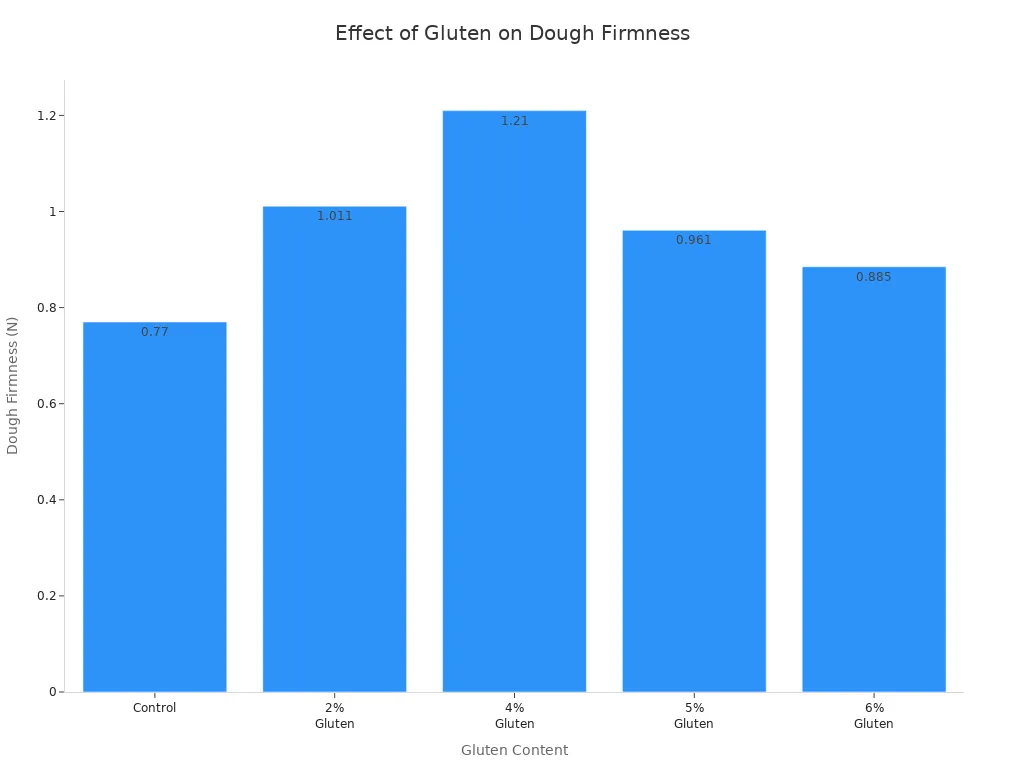
Vital wheat gluten also raises the freezing point of dough. This helps keep bread strong when frozen or stored.
Plant-based meats need a real feel and bite. Vital wheat gluten makes a strong, stretchy network. This network acts like animal muscle. It gives plant-based meats chewiness and stretch. You can mix vital wheat gluten with water and spices. This makes a thick, bendy structure. It stays together when cooked and sliced. You can shape it into sausages or chicken pieces. Vital wheat gluten soaks up water and keeps its shape. This makes plant-based meats feel and taste better.
Vital wheat gluten builds a stretchy protein network.
It gives plant-based meats a real feel and chew.
You can cook and slice these foods without losing shape.
High protein is needed for baking and meat alternatives. Vital wheat gluten has 75-80% protein by weight. This is more than most plant proteins. High protein helps muscles grow and heal. It also gives important amino acids. Vital wheat gluten is low in carbs and fat. This makes it good for low-carb or low-fat diets. You can use it to add protein to bread, rolls, and meat substitutes.
Nutrient | Vital Wheat Gluten | Other Plant-Based Proteins |
|---|---|---|
Protein Content | 75-80% | Varies (20-50%) |
Carbohydrates | Low | Moderate to High |
Fat | Low | Varies |
Essential Amino Acids | Yes | Varies |
Vitamins and Minerals | Limited | Higher in Whole Foods |
Note: Vital wheat gluten helps bread keep moisture. This makes baked goods last longer and stay soft.
Vital wheat gluten is important for structure, texture, and nutrition in baking and meat alternatives.
When you pick a substitute for vital wheat gluten, focus on how well it binds and stretches. Binding keeps your dough or meat alternative from breaking apart. Elasticity helps the dough stretch and rise by trapping air. Some substitutes, like soy protein isolate and pea protein, are good at holding things together. They mix with starch and fats in your recipe to make a strong structure. The size of flour pieces matters too. Bigger pieces, up to 200 micrometers, stop your food from feeling gritty and help keep air inside. This makes bread and cakes softer and nicer to eat. The way these substitutes stretch and hold together is important for your final food. For the best results, always check how well your ingredient binds and stretches.
Vital wheat gluten has a lot of protein. When you use other substitutes, try to pick ones that add more nutrition to your food. Soy protein isolate and pea protein both give extra protein and important amino acids. Chickpea flour and almond flour also make your food healthier, but they do not have as much protein as vital wheat gluten. Proteins from plants or animals help make gluten-free foods stronger and better for you. You can use these substitutes to make your bread and meat alternatives healthier and more balanced.
Keeping baked goods moist is important for soft, fresh bread and cakes. Many gluten substitutes help hold in moisture. Xanthan gum helps bread and cakes stay moist and get bigger, which makes the inside stronger and the texture better. Hydroxypropyl methylcellulose (HPMC) makes baked goods softer and last longer. If you use xanthan gum and HPMC together, you get even better results. These ingredients work together to make dough easier to use and improve the final food.
Substitute | Moisture Retention | Texture Improvement |
|---|---|---|
Xanthan Gum | High | Stronger crumb, more volume |
HPMC | High | Softer, longer shelf life |
Very High | Best texture and stability |
You can trust these substitutes to keep your food moist and tasty. They help you get the texture and shelf life you want, even if you do not use vital wheat gluten.
When you use a substitute for vital wheat gluten, you need to change your recipe. Each substitute makes dough act differently in baking. Always measure your flour and substitute carefully. For pizza and bread, use the right amount of each substitute. Sorghum flour, almond flour, and brown rice flour can replace wheat flour in the same amount. You can also use King Arthur Gluten-Free Measure for Measure Flour as a direct swap. If you use brown rice flour, add more liquid because it soaks up more water. Xanthan gum is important for holding batters together and making baked goods feel better. Start with 1/4 teaspoon of xanthan gum for every cup of flour. This helps dough stick together and makes pizza crust chewy.
Gluten Substitute | Ratio to Wheat Flour | Best Use Case |
|---|---|---|
Sorghum flour | 1:1 | Bread, cakes, muffins, cookies |
Almond flour | 1:1 | Dense baked goods like cakes and muffins |
Brown rice flour | 1:1 | Recipes needing a denser, moister crumb |
Tip: Try baking small batches first before making a lot. This helps you check if your baked goods turn out the way you want.
You can mix different substitutes to make baked goods better. Mixing helps dough hold together and keeps it moist. Starches make pizza and other foods bigger and softer. Enzymes like amylases and transglutaminase help dough stretch and make crumbs less hard. Hydrocolloids help dough trap air bubbles while baking. This is important for getting the right texture in gluten-free foods. Try mixing soy protein isolate from Xinrui Group with pea protein or psyllium husk for pizza dough and bread. This makes baked goods more stretchy and less likely to fall apart.
You need to check quality when using substitutes in commercial baking. Look at dough texture, moisture, and how it feels in every batch. Measure your ingredients carefully so your baked goods are always the same. Xinrui Group’s soy protein isolate and vital wheat gluten help you keep high standards in pizza and bread. Add vital wheat gluten if you want dough to be more stretchy and strong. For gluten-free recipes, mix different substitutes and change amounts to get dough that works like regular dough. Write down your recipe changes and test your baked goods often. This helps you make sure your products are always good.
Note: Xinrui Group can help you use soy protein isolate and vital wheat gluten in your recipes for pizza and bread. Ask them for help if you want to make your baking better.
Bread and rolls should rise well and feel chewy. Vital wheat gluten helps dough trap air and grow bigger. If you need gluten-free bread, use soy protein isolate from Xinrui Group. It helps gluten-free dough stick together. Pea protein and psyllium husk also help make bread better. You can mix these with starches for best results. To make bread with more protein, add soy protein isolate. This makes bread stronger and healthier.
Cakes and muffins should be light and fluffy. You can use substitutes like xanthan gum, guar gum, and gluten-free flour blends. These help cakes and muffins hold their shape and not fall apart.
Xanthan gum helps gluten-free cakes keep their shape.
Guar gum keeps cakes and muffins soft and light.
Gluten-free flour blends, like rice flour, sorghum flour, and tapioca starch, make cakes taste better.
Soy protein isolate from Xinrui Group can add more protein to muffins and cakes.
Pizza dough and flatbreads need to stretch and feel chewy. Vital wheat gluten makes regular dough soft and stretchy. For gluten-free pizza, use soy protein isolate, pea protein, and psyllium husk. These help make a tasty gluten-free crust. The texture may be a little different:
Aspect | Gluten-Free Doughs | Wheat Doughs |
|---|---|---|
Carbon Dioxide Retention | Holds more CO2 during rising | |
Hardness | Feels harder than wheat dough | Feels softer |
Expansion During Proofing | Grows less while rising | Grows more while rising |
Mix soy protein isolate with psyllium husk for better stretch and softness.
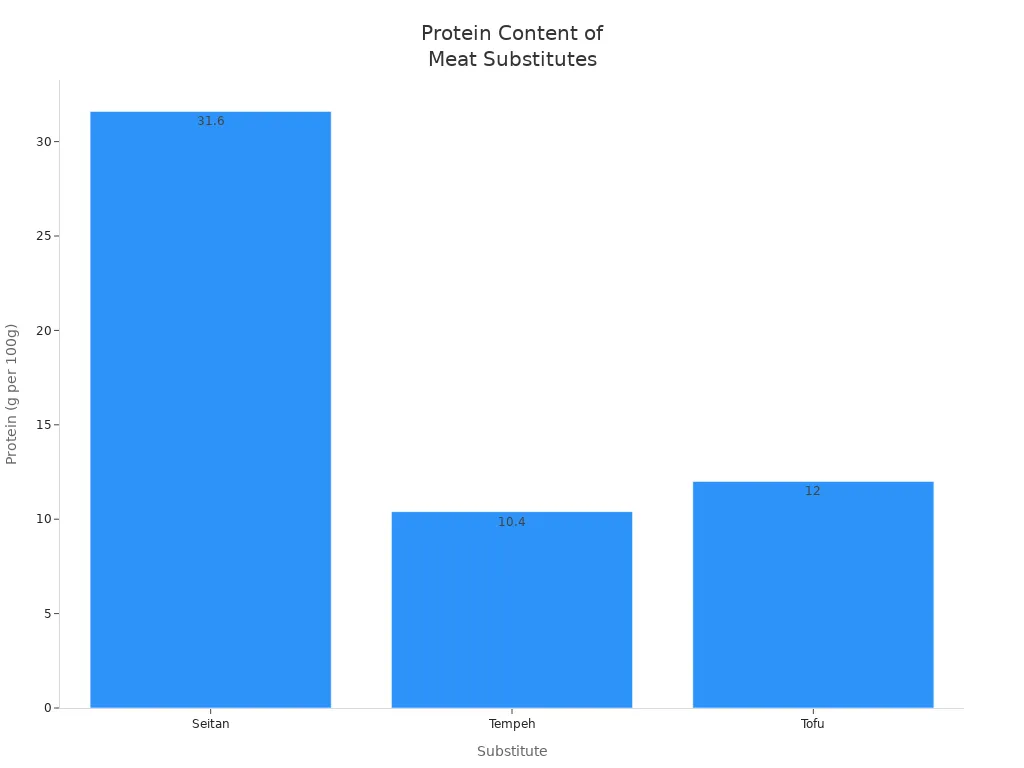
Seitan is a plant-based food with lots of protein. It has 31.6g of protein in 100g, so it is good for people who want more protein. Tempeh, tofu, and beans are other choices, but they have less protein and feel different.
Substitute | Protein Content (per 100g) | Texture Description |
|---|---|---|
Seitan | 31.6g | Dense, chewy |
Tempeh | 10.4g | Firm, cake-like |
Tofu | 12g | Soft, smooth |
Beans | Varies (high in fiber) | Mashing texture |
You can use vital wheat gluten from Xinrui Group to make seitan chewy like meat. Soy protein isolate also helps meat alternatives stick together and feel chewy.
Tip: Try different mixes of substitutes to get the texture and nutrition you want.
It is important to know how each substitute works in your food. The table below shows how vital wheat gluten, soy protein, and other choices compare:
Property | Vital Wheat Gluten | Soy Protein | Other Alternatives |
|---|---|---|---|
Binding Capacity | High | Moderate | Variable |
Dough Forming | Excellent | Good | Limited |
Viscosity | High | Moderate | Variable |
Nutritional Quality | High | Moderate | Variable |
Fibrous Structure | Yes | No | Yes (with additives) |
Cross-linking Potential | High | Low | Variable |
Vital wheat gluten makes dough stick together and stretch a lot. Soy protein gives good structure and some nutrition, but it does not stretch as much. Other substitutes, like psyllium husk or xanthan gum, help hold things together or keep food moist. You may need to mix them to get the best results.
Pick the right substitute for what you want to bake:
Breads and Rolls: Use soy protein isolate or pea protein to add more protein and make bread feel better. Add psyllium husk to keep bread moist and stretchy.
Cakes and Muffins: Try xanthan gum or guar gum to keep cakes soft and help them rise.
Pizza Dough and Flatbreads: Mix soy protein isolate with psyllium husk for a chewy crust that bends.
Meat Alternatives: Combine soy protein isolate with pea protein or chickpea flour to help things stick together and feel like meat.
Tip: Mixing two or more substitutes can give you the best texture and shape in gluten-free foods.
You want your baked goods and plant-based foods to turn out well every time. Top brands like Xinrui Group use special ways to make high-quality vital wheat gluten and soy protein. Xinrui Group checks every step, from the start to the end, so you get the same results each time. Their soy protein isolate and vital wheat gluten work well in breads, pizza, and meat alternatives. You can trust Xinrui Group to help you make foods that meet industry rules and taste good to your customers.
You can pick from many choices to replace vital wheat gluten in baking and meat alternatives. Each substitute works better in some recipes than others. You should find out how each one changes the texture and nutrition of your food. Try using more than one substitute to get the best results.
Xinrui Group has ISO9001 and ISO22000 certifications. This means they have strong quality and food safety systems. They check quality at every step, from buying raw materials to sending out products. Xinrui Group also cares about the environment. They use resources wisely and try to lower their impact on nature.
You can count on Xinrui Group for help and new plant-based protein ideas.
You find gluten in wheat, barley, and rye. Gluten forms when you mix flour with water. It gives dough its stretch and strength. Gluten helps bread rise and keeps baked goods chewy. Many people need gluten-free options for health reasons.
You should look at texture, taste, and nutrition. For gluten-free baking, try soy protein isolate, pea protein, or psyllium husk. These gluten-free options help dough stick together and stay moist. You can mix them for better results.
Yes, you can. Use a blend of gluten-free flours, xanthan gum, and psyllium husk. These ingredients help you get a soft, chewy texture. For more protein, add soy protein isolate. Gluten-free baking works best when you test small batches.
You can use almond flour, chickpea flour, brown rice flour, and sorghum flour. For better texture, add xanthan gum or psyllium husk. These gluten-free options work well in cakes, muffins, and bread. Always check labels to make sure products are gluten-free.
You should cool gluten-free bread or cakes before storing. Wrap them tightly to keep out air. Store in a cool, dry place or freeze for longer shelf life. Gluten-free baking stays fresh longer when you use moisture-holding ingredients like psyllium husk.

 English
 简体中文
简体中文