Views: 0 Author: Site Editor Publish Time: 2026-09-24 Origin: Site


The global plant-based beverage market is surging. Health-conscious consumers actively seek dairy alternatives without compromising nutritional density. Are standard ingredients enough to meet this demand? Hardly. Formulating smooth and highly stable drinks remains a notoriously tough endeavor for food scientists. When standard plant proteins hit a liquid matrix, they frequently cause chalky textures. Immediate clumping follows. Eventually, a thick layer of sedimentation forms at the bottom of the container.
Recent market intelligence reveals a pivotal shift in the functional beverage sector. Modern shoppers look past basic dairy-free labels. They demand exact protein parity. Many seek upwards of 20 to 30 grams of protein per serving. Crucially, they expect the creamy and fluid mouthfeel of traditional milk. This heightened expectation forces R&D teams to abandon generic commodities. The industry trend is clear—formulators must invest in specialized ingredients. These advanced proteins guarantee phase stability and prevent sedimentation over extended commercial shelf lives.
In this comprehensive guide, we will explore the underlying science of fluid dynamics in food manufacturing. By leveraging specialized soy protein isolate for beverages, manufacturers can effectively resolve critical physical hurdles and elevate their next production run.
Specialized Formulation: Standard soy protein frequently fails in liquid applications due to poor solubility. Specialized soy protein isolates are technically engineered for optimal fluid dynamics and long-term suspension.
Superior Dispersibility: Advanced processing techniques ensure the powder mixes instantly into water without forming lumps. This significantly streamlines factory operations.
Long-Term Stability: High-quality isolates maintain strict suspension in Ready-to-Drink beverages. They prevent sedimentation and phase separation even after harsh Ultra-High Temperature processing.
Product Spotlight: Specific premium grades offer ultra-low viscosity alongside highly neutral flavor profiles. They establish the gold standard for beverage formulators.
Cost and Clean Label Optimization: These specialized proteins act as natural emulsifiers. They reduce dependency on artificial stabilizers, lowering overall formulation costs while cleaning up consumer-facing ingredient labels.
Creating a commercially viable high-protein beverage requires overcoming severe physical hurdles. Picture a plant operator dumping 500 kilograms of raw protein powder into a 10,000-liter commercial vat. Standard soy proteins are primarily designed for meat processing or baking applications. Their high water-binding capacity becomes an immediate liability on the beverage floor. These powders are inherently hydrophobic. They repel water upon contact. The microscopic particles agglomerate aggressively.
Standard proteins possess a much lower Nitrogen Solubility Index. A significant portion of the protein matrix remains completely insoluble. When a consumer takes a sip, these un-dissolved particles create friction on the palate. The resulting chalky mouthfeel severely impacts brand loyalty.
In commercial liquid formulations, the manufacturing challenge shifts to long-term shelf stability. According to Stokes' Law, a particle's settling velocity is influenced by its mass and fluid viscosity. Over a standard 12-month commercial shelf life, gravity pulls heavy and un-hydrated particles downward. A dense sludge forms at the base of the container.
Ready-to-Drink beverages undergo rigorous thermal processing to ensure absolute microbiological safety. Extreme heat denatures standard proteins. They unfold, aggregate, and gel. This thermal stress triggers irreversible phase separation. Entire batches become unsellable, causing massive financial losses for the manufacturer.
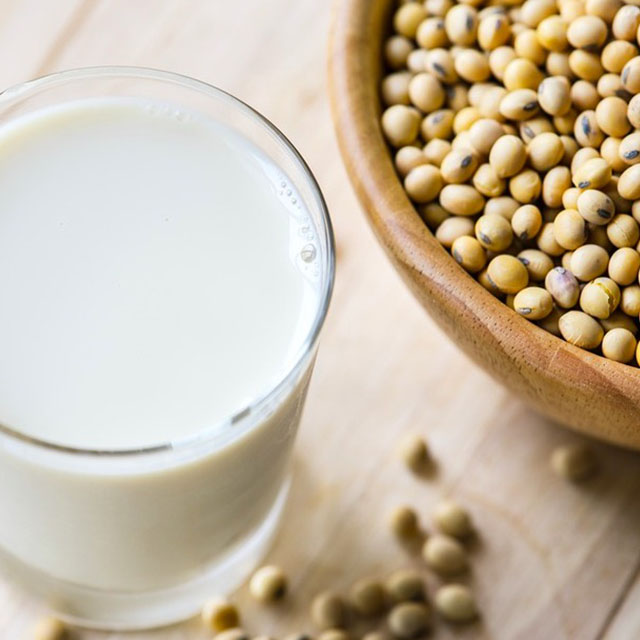
To solve these physical limitations, ingredient manufacturers developed ultra-refined solutions. A Beverage & Dispersion Type Isolated Soy Protein is a customized grade of plant protein. It yields a minimum of 90% protein on a dry weight basis. Its physical architecture is meticulously modified at the molecular level. This ensures optimal performance within liquid matrices.
The manufacturing process goes far beyond generic extraction. During the liquid-to-powder drying phase, these proteins undergo specific enzymatic hydrolysis. This carefully reduces their molecular weight. Thick and unmanageable gels are completely prevented.
These powders are subjected to agglomeration and precision surface treatments like lecithinization. Agglomeration increases particle porosity. Lecithinization alters surface tension. The ultimate goal is achieving a Nitrogen Solubility Index exceeding 90%. The vast majority of the protein dissolves completely into the liquid phase. It does not remain suspended as solid grit.
Dispersibility dictates efficiency for both consumer powders and large-scale industrial manufacturing. Wetting is the critical first step. Specialized soy protein isolates are engineered to break water's surface tension instantly. Capillary action draws water into the highly porous powder rapidly. Immediate hydration stops the powder from floating stubbornly on the surface.
A common nightmare on the factory floor is the formation of fish eyes. These are resilient clumps of powder. They become wet and gelatinous on the outside but remain completely dry inside. Standard protein hydrates too quickly on its exterior. It forms an impermeable barrier.
Dispersion-type isolates possess an optimal particle size distribution. This slows down surface gelling just enough for water molecules to penetrate the entire cluster. Complete and uniform hydration occurs without clumping.
For plant operations directors, high dispersibility translates directly to cost savings. Powders that mix instantly require significantly less processing time in energy-intensive high-shear mixers. Electricity consumption drops. Production bottlenecks disappear. Clump-free mixing prevents un-hydrated sludge from blocking inline filters and delicate heat exchangers. Maintenance downtime is drastically reduced.
| Performance Metric | Standard Soy Protein Isolate | Dispersion Type Soy Protein |
|---|---|---|
| Nitrogen Solubility Index | 60% - 75% | ≥ 90% |
| Wetting Time | Slow, prone to clumping | Instantaneous capillary action |
| Viscosity Profile | High, forms thick gels | Ultra-low, remains fluid |
| Thermal Stability | Poor, curds under extreme heat | Excellent, withstands 140°C |
| Sensory Profile | Astringent, beany off-notes | Highly neutral and bland |
Modern beverages rarely consist of just protein and water. They contain added functional fats like sunflower oil or coconut cream. Specialized soy protein isolate acts as a highly effective natural emulsifier. The protein molecules are amphiphilic. They contain both water-loving and fat-loving regions. By aligning at the oil-water interface, these proteins encapsulate fat droplets. Fat coalescing and unsightly fat rings are eliminated.
Achieving the perfect mouthfeel requires a calculated balance of rheology. If a protein builds too much viscosity, the beverage turns into pudding. Specialized isolates maintain a smooth and highly fluid viscosity. They provide a microscopic structural network. This keeps particles suspended evenly, neutralizing the pull of gravity over a long shelf life.
Liquid formulations face extreme mechanical stress during processing. Ultra-High Temperature treatments blast the liquid to 140°C for a few critical seconds. Specialized isolates withstand these harsh conditions. They do not curdle or precipitate. Excessive Maillard browning is avoided. They perform exceptionally well in neutral environments ranging from pH 6.5 to 7.5, making them perfect for soy milk or blended dairy alternatives.
When formulators need to bypass physical limitations completely, they turn to benchmarked grades. Utilizing 9030 9032 Soy Protein Isolate represents an investment in top-tier reliability. These numerical designations denote premium variations. They are engineered from the ground up for high-end fluid applications. Batch-to-batch consistency is guaranteed.
The transition from generic isolates to these specialized grades provides measurable technical advantages.
Ultra-Low Viscosity: A primary constraint in high-protein drinks is the exponential increase in thickness. Grades like 9030 and 9032 maintain a remarkably low hydrodynamic volume. Formulators can achieve high inclusion rates without turning the liquid into an un-drinkable paste.
Exceptional Solubility: With a Nitrogen Solubility Index frequently exceeding 90%, these isolates ensure virtually all protein dissolves cleanly. Chalkiness is entirely eliminated.
Bland and Neutral Flavor Profile: Historically, soy ingredients carried an astringent beany off-note. This was caused by the enzyme lipoxygenase. Premium grades utilize advanced vacuum flash evaporation and precise thermal deactivation. These volatile compounds are stripped away. A neutral profile means R&D teams spend significantly less money on masking agents.
These precise technical specifications make these isolates highly versatile. They are the ideal foundational ingredient for sports nutrition shakes, clinical meal replacements, and complex oat-soy hybrid blends.
From a clinical standpoint, soy remains the gold standard among commercially viable plant proteins. It is one of the very few plant sources recognized globally as a complete protein. It contains all nine essential amino acids. With a perfect Protein Digestibility-Corrected Amino Acid Score of 1.0, high-quality soy protein isolate is nutritionally equivalent to dairy. This provides a distinct marketing advantage over incomplete proteins like oat or rice.
Consumer demand for clean label products is at an all-time high. Shoppers want short and recognizable ingredient lists. Beverage-grade soy protein inherently possesses excellent stabilizing properties. It actively contributes to the structural integrity of the drink. Formulators can drastically reduce their reliance on artificial hydrocolloids and synthetic emulsifiers. The result is a natural product label that resonates with modern health-conscious buyers.
For procurement directors, budget predictability is paramount. Animal-based dairy protein pricing is highly volatile. Novel plant proteins carry a hefty premium due to immature processing infrastructure. Soy protein isolate benefits from a highly mature global supply chain. This translates to stable and cost-effective pricing models. Manufacturers can lock in long-term procurement contracts with absolute financial certainty.
Selecting the correct foundational ingredient requires strict alignment between R&D goals and procurement standards. Evaluate your end product format carefully. Are you producing a consumer-facing powder mixed in a standard shaker cup? Instantaneous dispersibility and rapid wetting are your highest priorities. Are you manufacturing a commercial liquid beverage? Extreme thermal stability and long-term suspension capabilities must take precedence.
Formulation scientists should never accept generic product descriptions. Always request detailed Certificates of Analysis from your prospective supplier. Pay close attention to the Nitrogen Solubility Index. Aim strictly for formulations with an index greater than 90% for liquid applications. Verify the moisture content is below 7.0%. Request comprehensive viscosity charts mapping the protein's rheological behavior at various temperatures.
The theoretical advantages of a specialized protein rely heavily on the supplier's manufacturing capabilities. Batch-to-batch variation can lead to catastrophic production failures. It is imperative to source from established manufacturers operating under stringent quality control frameworks, including ISO 9001 and non-GMO certifications. A reliable partner provides comprehensive technical support to help troubleshoot complex matrix challenges.
Achieving the perfect mouthfeel and ensuring a long shelf life come down to choosing the right foundational ingredient. Standard plant proteins simply cannot meet the rigorous demands of modern fluid applications. Specialized soy protein isolates are meticulously engineered to bypass these physical hurdles. They offer rapid dispersibility, exceptional thermal stability, and a clean flavor profile.
For R&D professionals looking to elevate their product lines, upgrading your formulations is a strategic step. It is non-negotiable for manufacturing commercially successful plant-based beverages. Ready to optimize your next production run? Explore the premium soy protein isolate solutions from Xinrui Group today. Contact their certified technical team to request detailed data sheets and product samples to experience the engineering difference firsthand.
Regular soy protein is typically engineered for meat processing or baking. It is designed to gel, bind water aggressively, and create physical structure. This inherently causes it to clump and settle when mixed into liquids. Beverage and dispersion types undergo highly specific secondary processing, including controlled enzymatic modification and agglomeration. This ensures rapid wetting, high solubility, and ultra-low viscosity in fluid environments.
These premium grades excel primarily in neutral pH applications ranging from pH 6.5 to 7.5. This includes dairy-alternative milks and coffee creamers. When formulating highly acidic beverages like citrus sports drinks, proteins naturally approach their isoelectric point and risk precipitating. Always consult your supplier's technical team to verify the exact grade modification needed for specific acidic environments.
No. Historically, older generations of soy products had a noticeable flavor profile. Modern extraction has completely resolved this issue. High-quality grades utilize advanced purification and thermal deactivation technologies to remove lipoxygenase, the enzyme responsible for volatile off-notes. This results in a highly neutral taste profile that allows your intended flavorings to present clearly.
It extends commercial shelf life through two primary mechanisms. First, its natural amphiphilic emulsifying properties help bind water and fat molecules tightly together. This prevents the emulsion from breaking. Second, its high thermal stability ensures the protein molecules do not denature during intense pasteurization. This prevents heavy particles from forming and settling as sediment over a 12-month period.
Yes. Soy protein isolate is one of the very few commercially available plant-based proteins scientifically classified as a complete protein. It contains all nine essential amino acids required for optimal human health and rapid muscle recovery. With a perfect Protein Digestibility-Corrected Amino Acid Score of 1.0, its nutritional quality is globally recognized as equivalent to animal-based proteins.
Foaming is a common issue caused by trapped air during high-shear mixing. Dispersion-type isolates are engineered with customized particle densities that wet rapidly, reducing the need for prolonged and aggressive agitation. Plant operators can further mitigate foaming by utilizing vacuum mixers or introducing the powder below the liquid surface via inline triblenders.
While premium dispersion grades dissolve efficiently in ambient water, the optimal hydration temperature on the factory floor typically ranges between 40°C and 50°C. Mild heat lowers the surface tension of the water and accelerates the penetration of the protein matrix. This ensures a completely smooth and lump-free solution before downstream pasteurization.

 English
 简体中文
简体中文