Views: 0 Author: Site Editor Publish Time: 2026-09-19 Origin: Site


The plant-based foods market grows fast. Selecting the right protein partner gets more complex. How do you ensure your supplier delivers on taste, texture, and reliability without hurting your budget or sustainability goals? This process needs a multi-dimensional evaluation framework. You need a practical guide covering key criteria, application-specific needs, and a supplier checklist.
Industry surveys reveal that food manufacturers prioritize organoleptic properties, functionality, and nutritional benefits. They also consider environmental impact, cost in use, supply reliability, and safety protocols. Whether you evaluate a pea protein or another plant protein, these factors matter. Sourcing a reliable ingredient requires balancing consumer demand with performance. Pea protein offers versatility, but every ingredient must meet your standards.
Check protein quality with DIAAS scores and amino acid profiles to meet nutrition needs.
Pick a protein that matches your product's needs: solubility for drinks, gelation for meat alternatives.
Use a supplier checklist to compare vendors, looking at quality, reliability, cost, and certifications.
Focus on sustainability and following the rules to keep your brand safe and meet what customers expect.
Test ingredients in your own product before placing big orders to make sure they work well and avoid having to change the recipe later.
Start by checking nutrition. Protein content is the base. Manufacturers sort ingredients into flours, concentrates, and isolates based on how much protein they have. Isolates have a high protein content, meaning you need less ingredient to hit your protein target, which lowers overall costs.
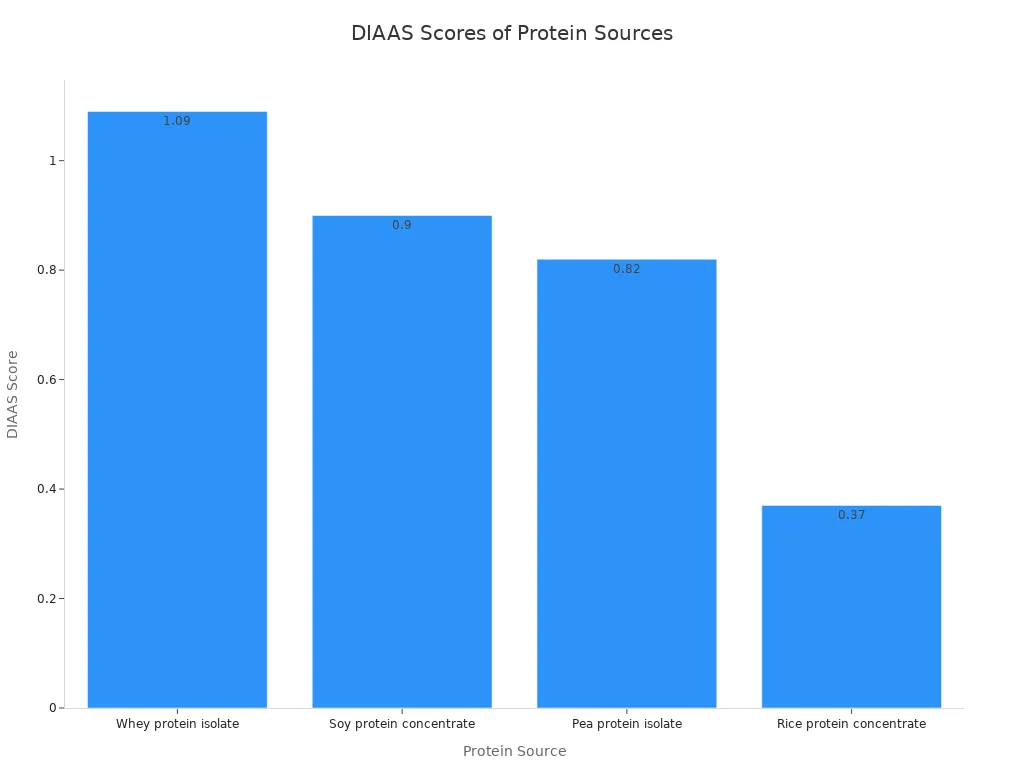
Amino acid makeup matters just as much. Different plant proteins have different profiles. Soy protein gives a complete amino acid profile, making it a strong pick for nutrition needs. Digestibility also plays a big part. The DIAAS score measures protein quality. Whey protein isolate scores 1.09, while soy protein concentrate reaches 0.90. Pea protein isolate scores 0.82, and rice protein concentrate lags at 0.37. These numbers help you compare protein quality across sources. Higher scores mean better amino acid absorption, which affects consumer satisfaction and product labels.
You should also look at antinutritional factors. Compounds like phytic acid and trypsin inhibitors can lower protein digestibility. Processing methods matter here. Heat and alkaline treatments can trigger Maillard reactions, which reduce bioavailability. A reliable supplier controls these variables through steady manufacturing practices.
Beyond nutrition, you need to see how the protein works in your specific product. Solubility, water binding, emulsification, and pH stability decide if your product performs as planned. These traits vary a lot across plant protein sources and even between batches from the same supplier.
For processed meats, the protein must act like myofibrillar proteins. It needs to bind water, stabilize fat, and form firm elastic gels. Soy isolate treated with alkaline or acid processes offers good solubility, gelling, and emulsification. Heat-treated soy isolate boosts water holding capacity but cuts solubility. Pea isolate provides water and fat binding, emulsification, and firm texture after thermal processing. Wheat gluten isolate excels at binding and cross-linking but has low solubility.
The table below sums up key functional traits across protein types:
Protein Type | Key Functional Properties for Meat Applications |
|---|---|
Soy isolate (alkaline/acid treated) | Good solubility, gelling, and emulsification; used as binder and emulsifier |
Soy isolate (heat-treated) | Increased water holding capacity, good gelling; decreased solubility |
Soy flour/meal (defatted) | Water binding capacity and fat retention |
Pea isolate | Water and fat binding, emulsification, firm texture after thermal processing |
Wheat gluten isolate | Binding and cross-linking capacity; low solubility |
Soy protein isolate shines in moisture and oil retention. This makes it great for sausages, meatballs, and dairy alternatives. The ingredient improves texture, raises protein content, and works as an effective emulsifier. Its versatility across uses simplifies your sourcing plan.
pH stability deserves extra attention. Plant proteins generally show lower emulsifying activity than dairy proteins. Sunflower protein hits 80% emulsion stability after 3 hours, while pea, rice, chickpea, and oat proteins reach 65–70% at first. Pea protein emulsions stay stable for about 14 days at pH 7. For acidic dairy alternatives, you need proteins that keep solubility and stability across a pH range of 3.0 to 8.0. Good solubility at different pH levels ensures smooth, creamy textures in neutral and acidic products.
Particle size also affects functionality. Smaller particles boost hydration traits. This impacts wettability and oil binding capacity. When you check suppliers, ask for particle size specs and functional data. This info helps you predict performance before you commit to large orders.
Your ingredient choice finally balances nutrition needs with functional demands. A high-protein isolate with poor solubility fails in beverages. A protein with great water binding but weak emulsification struggles in meat alternatives. You need a supplier who gets these trade-offs and provides steady, well-defined products. This approach ensures your plant-based foods meet consumer expectations for taste and texture while keeping operations efficient and easy to process.
Different plant-based foods need different protein traits. For plant-based foods like meat alternatives, texture and binding matter most. You need proteins that form strong gels, hold water, and create a chewy, fibrous structure. These properties make the final product feel like real meat. When developing vegan food products, sourcing the right ingredient is crucial for success.
Gelation stands as a fundamental property. The protein must change from round particles into lined-up fibers. Cross-linked emulsified gel structures copy the feel of cooked meat. Polysaccharide-induced gelation helps hold water and adds strength. You also need water-holding capacity to form fibers properly. The right water-to-dry matter ratios give elasticity and a chewy texture.
Firmness also matters. Dry extrusion methods reach firmness levels that feel more like meat. These texture traits directly affect if people like the product. A meat alternative that lacks chewiness will not succeed. When making vegan food products, you need ingredients that give these texture traits every time.
A flexible ingredient like soy protein isolate works well here. It fits in sausages, meatballs, and other processed meat products. The ingredient binds water, holds oil, and acts as an emulsifier. This makes it a solid choice for making vegan food products. You can use it in many product lines without changing suppliers.
Beverages are a different challenge. For plant-based foods like beverages, solubility is most important. Plant proteins generally dissolve less well than dairy proteins. Adding more protein directly leads to settling and a gritty feel. This ruins the creamy texture that consumers expect. Your sourcing choices affect the final product quality. Vegan food production needs careful protein selection. You need ingredients that keep dissolving across a pH range.
Fiber can act as a natural stabilizer. It keeps protein floating in liquid. But the way fiber and protein interact is hard to predict. It can either help or hurt solubility, depending on the pair. You must balance carefully to avoid making the drink too thick.
Mixing different plant protein sources to raise levels can change solubility by up to 30%. This makes formulation tricky without research. Gentler extraction methods keep the protein's natural shape and improve solubility. Changing pH, adding salt, or heating the final product can also help.
For plant-based foods like bakery items, pea protein isolates offer great water binding. This slows down staling during shelf life. Pea protein also gives structure, makes baking more stable, and works for gluten-free items. Vegan food production needs proteins that keep texture over time. Pea protein works well in biscuits and crackers. It gives better crunchiness in these products. Another option is pea isolate, which offers similar benefits. Pea protein also helps with foaming and emulsion ability. It offers good water binding. Wheat protein improves dough handling and gives more volume. Hydrolyzed wheat protein lowers dough elasticity for a less dense texture.
Your ingredient choice directly affects vegan food production. The right supplier gives steady performance across uses. This makes your sourcing simpler and ensures reliable results.
Start your review with a clear plan. Use a scoring system to compare vendors fairly. Give points to each item based on what matters most to you. If steady quality is key, weight it higher. If price is a big deal, score that more.
Steady quality should be your top priority. Good vendors follow strict rules in making their products. Every batch must act the same way. Changes in protein level, color, taste, or how it works can hurt your product. A pea protein seller that gives you the same quality each time saves you from fixing recipes later.
A reliable supply is just as important. Good inventory control and on-time delivery keep things running. Shipping delays or missing ingredients can stop your whole line. When you check out a pea protein seller, ask about their shipping network. See what they do if raw materials run short.
Production size tells you if a partner can keep up with your growth. New capacity can take a significant amount of time to set up. This timing affects how dependable they are over the long run. A pea protein seller with flexible processing units can grow faster. But getting enough raw materials is still a limit. Vendors who own their supply chain handle price jumps better. Those who rely on others face ups and downs. This makes their prices less steady when demand spikes.
Steady pricing helps you plan your budget. Food makers who sign long-term deals get better rates. Buying in larger amounts lowers costs. These agreements make long-term partnerships cheaper and more stable. A pea protein seller with steady prices protects your profits.
Quality checks make sure every shipment is the same. Look for strong testing steps. Being able to trace ingredients helps with rules and laws. It also makes the whole supply chain clearer for plant-based foods. Good manufacturing cuts down on differences between batches. Experts who know their stuff help you improve your products. A pea protein seller with recipe experience cuts down on development problems.
Think about these points when you compare vendors. Minimum order sizes affect how flexible you can be. Lead times decide how much stock you keep. Production size ensures you can grow. Steady pricing protects your bottom line. A balanced scorecard across these areas guides your choice.
Having backup sources for raw materials and making products close to where they are sold lowers risks from world events. This keeps supply steady for your markets. It is a key part of keeping long-term manufacturing partnerships strong.
Certifications help makers meet goals for honesty and clean labels in plant-based foods. Different certifications serve different customer groups. A pea protein seller with many certifications reaches more buyers.
Plant protein sustainability is more than just certifications. Look at how making the product affects the environment. Think about water use, energy use, and waste. Plant-based food companies want clear reports on sustainability. A pea vendor that shares environmental data earns trust.
Environmental issues affect your brand's image. Pea protein from farms they own gives better control over environmental impact. Processing methods that minimize water and chemical use lower the environmental footprint of plant-based protein ingredients. Ask vendors about how they make their products. Learn about their eco-friendly advantages.
Following rules makes sure your products meet legal standards. A pea protein seller must follow food safety laws in your markets. This covers label rules and contamination controls. Sourcing that meets buyer demand for clean labels is important. A partner with extensive experience in the industry gives a strong base for food making. Their focus on quality sourcing fits current trends.
When you check a plant-based protein seller, verify their certifications yourself. Ask for papers. Check when they expire. Some certifications need yearly checks. Make sure the vendor stays active. Sustainability claims should be provable. Ask for outside audits or public reports. A pea protein seller with open practices offers more value.
Different plant proteins affect the environment in different ways. Pea protein from areas with plenty of water has benefits. Buying locally cuts shipping emissions. Think about the whole life of the ingredient. This includes farming, processing, shipping, and packing. Plant-based food companies use this data for their own reports. A pea protein seller that gives lifecycle data helps you hit your targets.
Your final partner should match your company's values. If sustainability matters most, pick vendors with strong green records. If following rules is key, focus on how many certifications they hold. The right partner meets both your practical needs and your ethical standards for plant-based foods.
Selecting the right plant protein partner requires more than brand reputation. You need a structured, data-driven approach.
The best supplier aligns with your specific product goals, application needs, and corporate values.
For plant-based foods, texture and nutrition matter. A plant-based protein like pea works well for many applications. Consider pea protein as an example. Pea offers versatility across product lines. A pea ingredient meets your needs. But pea sourcing requires careful evaluation.
Food manufacturers must prioritize sustainability. Your ingredient choice affects your brand image. Use data to compare suppliers. The right partner supports your food manufacturing goals.
Share your experiences or ask questions in the comments section below.
Ask for a Certificate of Analysis for each batch. This paper shows the real protein amount, not just what the seller says. You can also ask an outside lab to test it. Checking with an independent lab keeps your product quality safe. A good seller will agree to this check without any problem.
Test how well it dissolves, holds water, and mixes with fats in your own product. First, make small test batches. Compare the results with your current ingredient. This way, you see how it works before you order a lot. You avoid having to fix the recipe later.
Relevant certifications that verify the ingredient's claims are important for clean labels and can help you reach more customers. Ask for the current papers and their end dates. Check them with the issuing body.
Figure out the cost per unit of protein, not per pound. A cheaper ingredient with less protein may cost more for each gram of real protein. Also think about how much you use and how it works. A pea protein that holds water better may lower your total ingredient costs.
Ask about how much they can make, the smallest amount you can order, and how long delivery takes. Ask about backup plans for getting materials. A seller with more than one factory gives you more safety. You need to be sure they can grow with you without lowering quality.

 English
 简体中文
简体中文