Views: 0 Author: Site Editor Publish Time: 2026-06-04 Origin: Site


You can use the chart below to compare plant protein sources, specifically Soy Protein Isolated and Wheat Gluten. The chart provides information on the protein content and quality of each option. For instance, the PDCAAS score indicates how efficiently your body utilizes the protein:
Protein Source | PDCAAS Score |
|---|---|
Soy Protein Isolated | 1.0 |
Wheat Gluten | ~0.25 |
When reviewing this chart, consider factors such as amino acid profile, digestibility, nutritional value, allergenicity, and whether it suits your dietary needs. Xinrui Group offers high-quality Soy Protein Isolated and Wheat Gluten to meet your requirements.
Soy protein isolate is a complete protein. It gives all essential amino acids. This makes it good for muscle building. It also helps with recovery.
Wheat gluten has a lot of protein. But it does not have some essential amino acids. You should mix it with other protein sources. This helps you get a balanced diet.
Look at the PDCAAS score to see how your body uses the protein. Soy protein isolate scores 1.0. Wheat gluten scores about 0.25.
Think about your dietary needs. Soy protein isolate does not have gluten. It is good for vegans. Wheat gluten is not safe for people with gluten sensitivities.
Always check labels for allergens. Soy protein isolate has a low allergen risk. Wheat gluten can cause problems for people with gluten allergies.
You can use this chart to compare soy protein isolated and wheat gluten. The chart shows the most important things about these plant proteins. You can see protein content, amino acid profile, digestibility, nutrition, allergen risk, and if they fit your diet. This makes it easier to choose what you need.
Attribute | Soy Protein Isolated | Wheat Gluten |
|---|---|---|
Protein Content (%) | ≥90 | 75-80 |
PDCAAS Score | 1.0 | ~0.25 |
Amino Acid Profile | Complete, high in lysine, leucine, isoleucine, valine, arginine | High in glutamine, low in lysine, moderate in BCAAs |
Digestibility | High | Moderate |
Nutritional Value | Rich in essential amino acids, contains micronutrients | Good for baking, lacks some essential amino acids |
Allergenicity | Low (except for soy allergy) | High (contains gluten) |
Dietary Suitability | Vegan, vegetarian, gluten-free | Vegan, vegetarian, not gluten-free |
Soy protein isolated has all the amino acids your body needs. It has leucine, isoleucine, and valine, which help build muscle. There is a lot of lysine in soy protein isolated, and it works well with grains. Soy protein isolated also has more arginine than dairy proteins. Wheat gluten is good for making bread because it helps dough stick together. But wheat gluten does not have much lysine and is not good for people who cannot eat gluten.
This chart helps you pick the right plant protein for you. If you want more protein and all the amino acids, soy protein isolated is a good choice. It is easy to digest and works for vegan, vegetarian, and gluten-free diets. Wheat gluten is best for baking or making bread chewy. You should not eat wheat gluten if you cannot have gluten or have celiac disease.
To decide fast, do these things:
Check protein content and PDCAAS score. Soy protein isolated has higher numbers.
Look at the amino acid profile. Soy protein isolated gives you more essential amino acids.
Think about digestibility. Soy protein isolated is easy for your body to use.
Look at allergen risk and if it fits your diet. Soy protein isolated works for more diets, but wheat gluten is not gluten-free.
Tip: Always read nutrition labels and ingredient lists if you have allergies or special diets.
This comparison helps you reach your goals. You might want to build muscle, eat vegan, or bake bread with more protein. Xinrui Group has both soy protein isolated and wheat gluten, so you can get good plant protein.
You want to boost your protein intake with a reliable source. Soy protein isolate from Xinrui Group gives you a strong foundation for a protein-rich meal. Each 100 grams of soy protein isolate provides about 28.3 grams of protein. This makes it a smart choice for anyone who needs more protein in their diet. You can use soy protein isolate in many foods, just like tofu or black beans. These foods help you reach your protein goals.
Soy protein isolate stands out because it contains all the essential amino acids. Your body needs these amino acids to build muscle and repair tissue. The PDCAAS score for soy protein isolate is 0.9, which means your body can use the protein efficiently. The DIAAS score is also high at 0.92. You get a complete protein source that supports your health and fitness.
You can add soy protein isolate to shakes, baked goods, or even mix it with black beans for a balanced meal. Many people choose soy protein isolate because it is plant-based and works for vegan diets. If you want to improve your protein intake, soy protein isolate gives you flexibility and quality.
Wheat gluten offers a different approach to protein intake. You find wheat gluten in many baked goods and meat alternatives. Each 100 grams of wheat gluten contains about 51.1 grams of protein. This high protein content makes it popular for people who want to increase their protein intake without using animal products.
However, wheat gluten does not provide all the essential amino acids. It is low in lysine, which you find in black beans and other beans. The PDCAAS score for wheat gluten is 0.45, and the DIAAS is 0.39. These scores show that your body cannot use the protein from wheat gluten as well as it can from soy protein isolate. You may need to combine wheat gluten with black beans or other beans to get a complete set of amino acids.
If you enjoy baking or want to make chewy bread, wheat gluten works well. You can also use it with black beans or tofu to create balanced, protein-rich meals. Always think about your protein intake and amino acids when you choose wheat gluten.
Food Item | PDCAAS | DIAAS |
|---|---|---|
Soy Protein | 0.9 | 0.92 |
Wheat Gluten | 0.45 | 0.39 |
Tip: Combine wheat gluten with black beans or other beans to improve your amino acids profile and support your protein intake.
Your body needs essential amino acids to grow and heal. You must get these amino acids from food. Your body cannot make them on its own. Soy protein isolate gives you all the essential amino acids. This makes it a complete protein. Foods like edamame, chickpeas, and green lentils are also complete proteins. These foods help you eat a balanced diet.
Here is a table that compares soy protein isolate and wheat gluten:
Protein Source | PDCAAS | Completeness |
|---|---|---|
Soy Protein Isolate | 1.0 | Complete Protein |
Wheat Gluten | 0.25 | Deficient in Amino Acids |
Soy protein isolate has a PDCAAS score of 1.0. This means your body uses it very well. Wheat gluten has a lower score. It does not give you all the essential amino acids. To get enough protein, eat wheat gluten with foods like edamame, chickpeas, or green lentils.
Tip: Eat different plant proteins, like chickpeas and green lentils, to get all the essential amino acids your body needs.
Limiting amino acids are the ones missing or low in a protein. Wheat gluten is low in lysine, which is an essential amino acid. You can fix this by eating wheat gluten with chickpeas or green lentils. These foods have more lysine. They help you get a better mix of amino acids.
Soy protein isolate does not have a limiting amino acid. It works well as your main protein source. You can add edamame or chickpeas to your meals for extra nutrition. Many people put green lentils, chickpeas, and edamame in salads or soups to get more protein.
If you want to build muscle or stay healthy, pick complete proteins like soy protein isolate. You can also mix wheat gluten with chickpeas, green lentils, or edamame to make your meals more balanced.
It is important to know how your body uses plant proteins. Soy protein isolate and wheat gluten are not the same in digestibility and bioavailability. Soy protein isolate has a high digestibility score of 1.0. Wheat gluten only scores 0.25. You can see this in the table below:
Protein Source | Digestibility Score (PDCAAS) |
|---|---|
Soy Protein Isolate | 1.0 |
Wheat Gluten | 0.25 |
Soy protein isolate is digested between 93% and 97%. This is almost as good as animal proteins. The biological value for soy protein isolate is 74. This means your body uses it well. Wheat gluten does not digest as well and has lower protein quality. If you eat a whole-food, plant-based diet, soy protein isolate is better. It gives you important amino acids and helps your muscles grow.
Muscle protein synthesis is lower after eating soy or wheat protein hydrolysates than with whey protein isolate. Soy protein isolate does not help older men build muscle as much as whey protein isolate. Wheat gluten has the lowest PDCAAS score of plant proteins. It is not as good for building muscle.
Many things change how your body digests soy protein isolate and wheat gluten. Amino acid composition is very important. Soy protein isolate has all the amino acids your body needs. This makes it easier to digest. Processing, like hydrolysis, breaks proteins into smaller pieces. This helps your body use them better. You can see these factors in the table below:
Factor | Description |
|---|---|
Amino Acid Composition | The amino acid profile of soy protein isolate and wheat gluten affects their digestibility. |
Processing Methods | Hydrolysis improves digestibility by creating low molecular weight fragments that enhance bioavailability. |
Structural Properties | The ratio of soy protein to wheat gluten influences the physicochemical properties and digestibility of meat analogues. |
Hydrolyzed wheat gluten dissolves well in water and holds water. This helps your body digest it. Wheat protein forms a network that makes meat alternatives chewy and easier to digest. If you eat a whole-food, plant-based diet, pick proteins that are processed for better absorption. You should also mix different plant proteins to get more nutrition.
Tip: You can make proteins easier to digest by picking ones with all the amino acids and by mixing soy protein isolate with other plant proteins in your whole-food, plant-based diet.
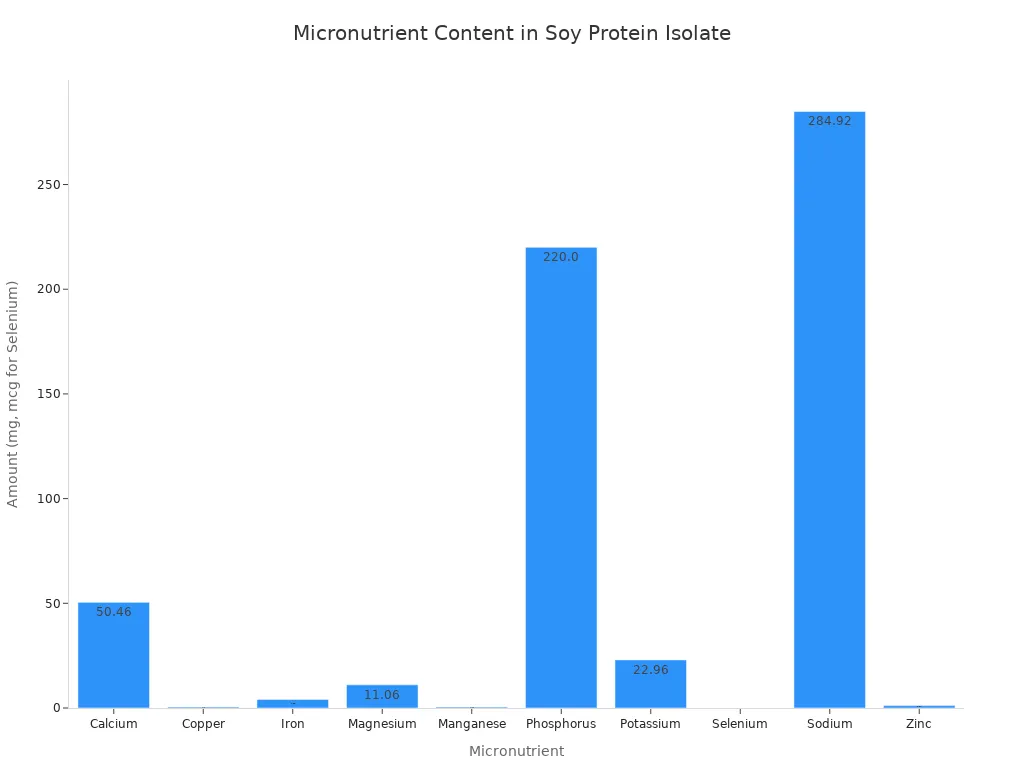
Soy protein isolate gives you more than just protein. It has many important minerals that help your body. You get calcium, iron, magnesium, and zinc from soy protein isolate. These minerals help your bones, blood, and muscles. You also get copper, manganese, phosphorus, and sodium. Each mineral helps your body work every day.
Micronutrient | Amount | Daily Value (%) |
|---|---|---|
Calcium | 50.46 mg | 4 % |
Copper | 0.45 mg | 50 % |
Iron | 4.11 mg | 23 % |
Magnesium | 11.06 mg | 3 % |
Manganese | 0.423 mg | 18 % |
Phosphorus | 220.00 mg | 18 % |
Potassium | 22.96 mg | 0 % |
Selenium | 0.23 mcg | 0 % |
Sodium | 284.92 mg | 12 % |
Zinc | 1.14 mg | 10 % |
Tip: Soy protein isolate can help you get more iron and copper. These minerals are good for your energy and immune system.
Wheat gluten has different nutrients than soy protein isolate. You get selenium, manganese, phosphorus, and copper from wheat gluten. These minerals help your body grow and stay strong. Wheat gluten also has folate, iron, thiamine, niacin, calcium, and vitamin B6. These vitamins and minerals help your metabolism, blood, and bones.
Here are some important things about wheat gluten:
Selenium helps your immune system.
Manganese helps your body use energy.
Phosphorus keeps your bones and teeth healthy.
Copper helps your heart and makes red blood cells.
Folate helps your cells grow, especially during pregnancy.
Iron helps your blood carry oxygen.
Thiamine and niacin help your body use energy.
Calcium makes your bones strong.
Vitamin B6 helps your body use protein and carbs.
You can use wheat gluten in baking or as a meat substitute. If you eat vegan protein, wheat gluten gives you more choices and nutrition.
Note: Wheat gluten has gluten. Do not eat it if you have celiac disease or gluten sensitivity.
It is important to know which plant proteins can cause allergies. Soy protein isolate does not cause allergies for most people. Some people are allergic to soy, so check labels if you worry. Wheat gluten has gluten. Gluten causes problems for people with celiac disease or gluten sensitivity. Gluten is found in many baked goods and meat substitutes. If you avoid gluten, wheat gluten is not safe for you.
Here is a simple look at allergen risks:
Protein Source | Allergen Risk | Notes |
|---|---|---|
Soy Protein Isolate | Low (except for soy) | Check for soy allergy |
Wheat Gluten | High (contains gluten) | Not safe for gluten-free diets |
Tip: Always check ingredient lists if you have allergies. You keep yourself safe by knowing what is in your food.
You want plant proteins that match your diet. Soy protein isolate is good for vegans and vegetarians. You find it in vegan deli meats, burgers, and shakes. It is plant-based and helps you build muscle and stay healthy.
Wheat gluten is also used by vegetarians and vegans. You see it in seitan, which is a meat substitute. It has no sodium, fat, or cholesterol. Many vegetarians pick wheat gluten if they cannot eat soy. Wheat gluten is not good for gluten-free diets. People with celiac disease or gluten sensitivity must not eat it.
Soy protein isolate works for gluten-free diets. It gives you all the protein you need without gluten. Wheat gluten is not safe for gluten-free diets, but it is good for vegetarians who do not have gluten problems.
Soy protein isolate is good for vegans, vegetarians, and gluten-free diets.
Wheat gluten is good for vegetarians and vegans but not gluten-free diets.
Vital wheat gluten is a good choice for vegetarians who are allergic to soy.
Note: Pick plant proteins based on your diet and allergies. This helps you stay healthy and enjoy your food.
When you look at soy protein isolate and wheat gluten, you see each has its own strengths. The chart below helps you quickly see the main good points of both plant proteins.
Protein Source | Key Advantages | Considerations |
|---|---|---|
Soy Protein Isolate | Complete protein, high digestibility, heart health support, excellent texture for meat alternatives, low allergen risk (except soy allergy), gluten-free | Not suitable for those with soy allergies |
Wheat Gluten | High protein content, low in carbs and fat, strong binding for baking, mimics meat texture, rich in minerals | Not suitable for gluten-free diets, common allergen |
Soy protein isolate gives you many benefits. It has all the essential amino acids your body needs. You can use it in shakes, bars, or meat alternatives. Manufacturers pick soy protein isolate because it makes products with a meat-like texture and lots of protein. It gives low-fat foods a smooth feel because it mixes well and binds fat.
Studies show soy protein isolate can help your heart. It supports better blood lipid profiles. This makes it a smart choice for athletes and people who want to build muscle or keep their heart healthy.
Soy protein isolate does not have gluten. It is safe for gluten-free diets. Most people can eat it unless they have a soy allergy.
Wheat gluten gives you different benefits. It is about 75-80% protein by weight. It is low in carbohydrates and fat. This fits well with low-carb or low-fat diets. Wheat gluten has minerals like iron, calcium, and magnesium. These help you keep a balanced diet.
Wheat gluten makes bread dough stronger and more stretchy. This helps baked goods rise and have a better texture.
Wheat gluten keeps baked products fresh longer by holding moisture.
You can make plant-based meats, like seitan, that feel and taste like real meat.
Note: Wheat gluten is not good for gluten-free diets. It is a common food allergen. If you have celiac disease or gluten sensitivity, you should not eat it.
Knowing these pros and cons helps you pick the plant protein that fits your health goals and diet needs.
You want to pick the best plant protein for you. Nutritionists say you should think about your protein needs first. Your age and how active you are matter. Your fitness goals are important too. Try to get 0.8 grams of protein for each kilogram you weigh. If you want to build muscle or recover after exercise, you need a complete protein. Soy protein isolate gives you all the essential amino acids. Wheat gluten is good for baking and adds protein, but it does not have all the amino acids.
When you choose a protein powder, look for these things:
The protein source is clear and gives enough protein.
There is little added sugar and few ingredients.
Simple formulas are good for sensitive stomachs.
Pick a taste and mixability you like every day.
Complete protein helps your muscles recover.
Energy-boosting ingredients are good before workouts.
Vegans often pick soy protein isolate because it fits their diet. You can use it in shakes, bars, or meat alternatives. Wheat gluten is popular with vegans who make seitan or bake chewy bread. If you have allergies, check labels for soy or gluten. Vegans with gluten sensitivity should not eat wheat gluten. Vegans who need gluten-free protein can use soy protein isolate.
Tip: Always pick your protein based on your fitness goals and diet needs. Vegans need complete proteins for muscle recovery and daily nutrition.
Xinrui Group helps the food and drink industry with plant protein. You find soy protein isolate in sausages, meatballs, vegetarian foods, and drinks. Vegans use these products to make meals with good texture and lots of protein. Wheat gluten from Xinrui Group makes bakery products, pasta, and meat substitutes better. Vegans who want meat-like texture use wheat gluten in seitan.
Food makers trust Xinrui Group for quality and non-GMO ingredients. You can use their soy protein isolate to add protein and improve texture in vegan foods. Vegans who need gluten-free foods can use soy protein isolate. Vegans who want to bake or make plant-based meats can use wheat gluten. Xinrui Group gives technical help and custom products to help you reach your production goals.
Note: Xinrui Group’s plant protein solutions help vegans, vegetarians, and food makers create new, healthy products for a growing market.
You can spot differences and similarities between soy protein isolate and wheat gluten. Soy protein isolate has more protein and balanced amino acids. Wheat gluten is good for changing texture and keeping water in foods. Both proteins are useful for making meat alternatives and baked goods. Soy protein isolate works for gluten-free diets. Wheat gluten does not work for gluten-free diets.
The chart helps you choose the best protein for you. You can check nutrition, environmental impact, and health benefits:
Protein Source | Nutritional Value | Environmental Impact | Health Effects |
|---|---|---|---|
Plant-Based Proteins | High in fiber, vitamins, minerals | Lower carbon footprint | May lower risk of chronic disease |
Xinrui Group has plant protein solutions for your needs. You can ask experts for help with special uses.
Soy protein isolate has all the amino acids you need. Wheat gluten has lots of protein but misses some amino acids. Soy protein isolate is good for gluten-free diets. Wheat gluten is best for baking and making chewy foods.
No, you should not eat soy protein isolate if you are allergic to soy. Always read food labels and ask your doctor before trying new proteins.
Wheat gluten has gluten in it. Do not use wheat gluten if you have celiac disease or gluten sensitivity. Pick soy protein isolate or other gluten-free proteins instead.
You can put soy protein isolate in shakes, smoothies, baked goods, or meat alternatives. It mixes easily and adds more protein to recipes.
Soy protein isolate helps your muscles grow because it has all the amino acids and is easy to digest. Wheat gluten adds protein but does not have all the amino acids you need.

 English
 简体中文
简体中文