Views: 0 Author: Site Editor Publish Time: 2026-04-29 Origin: Site


If you want to build muscle, soy protein isolate is a great choice. It has a lot of protein and good amino acids. Pea protein is good if you need something without allergens or want to help the planet. Soy protein isolate is the most popular in the world. It has about 64.4% of the market. Pea protein is becoming more popular. This is because it is easy to digest and does not cause allergies. Xinrui Group makes soy protein isolate you can trust. Think about your fitness goals before you pick. Also, think about what you can eat and what tastes good to you.
Pea Protein | Soy Protein | |
|---|---|---|
Protein Content (per scoop) | ~15–20 grams | ~20–25 grams |
Amino Acids | Complete, all essential | Complete, higher methionine |
Digestibility | Easy, allergen-free | High, common allergen |
Soy protein isolate helps build muscle. It gives you 20-25 grams of protein in each scoop. It also has all the important amino acids your body needs. Pea protein is good for people with allergies. It does not cause many allergic reactions. It is also easy for your body to digest. Both protein powders help your stomach stay healthy. They help good bacteria grow in your digestive system. Think about what you eat and what flavors you like before you pick soy or pea protein. Pea protein is better for the planet. It uses less water and land than soy protein.
If you want to build muscle, you need a good protein powder. Both soy protein isolate and pea protein help with muscle growth. Soy protein isolate has at least 90% protein. It helps your muscles grow like whey protein does. Pea protein also works well. Studies show pea protein and whey protein give similar muscle and strength gains after exercise.
Here is a table that shows what studies found about pea protein and other protein powders for muscle gain:
Study Type | Findings | Comparison |
|---|---|---|
Randomized Controlled Trial | No difference in muscle thickness between pea and whey protein after 12 weeks of training. | Pea protein vs. whey protein |
8-week Study | Body shape, muscle size, performance, and strength were similar for whey and pea protein. | Pea protein vs. whey protein |
12-week Study | Men using pea protein had biceps gains like those using whey protein. | Pea protein vs. whey protein |
Systematic Review | Four studies showed whey and soy protein both increased muscle mass, but two studies said whey was better. | Soy vs. whey protein |
Soy protein isolate from Xinrui Group is a high-quality choice for muscle gain. It has all the amino acids your body needs and helps muscles grow. Pea protein is also a good choice, especially if you want a plant-based protein powder.
If you want to help your stomach, you need a protein powder that is good for digestion. Both soy protein isolate and pea protein are good for gut health. Soy protein powder helps good bacteria like bifidobacteria and lactobacilli grow. Fermented soy products help even more. Pea protein powder also helps good bacteria like lactobacillus and bifidobacterium.
Protein Source | Effect on Gut Microbiota | Study Findings |
|---|---|---|
Soy Protein | Increases good bacteria, changes gut bacteria types | Studies show more bifidobacterium and other changes in women. A 2-week study showed more bifidobacteria and lactobacilli with fermented soymilk. |
Pea Protein | Helps good bacteria grow | Pea protein may help lactobacillus and bifidobacterium in the gut. |
Cow's Milk vs. Soy | Similar gut bacteria in babies | Babies who switched from cow’s milk to soy formula had similar good bacteria. |
Animal Studies | Gut bacteria changed with different proteins | Rats eating soy protein had more firmicutes to bacteroidetes than those eating casein. |
Pea protein is usually easier to digest. It is less likely to upset your stomach than whey or casein. Whole peas have more fiber, but pea protein powder has less fiber, so it is gentle on your stomach.
If you want a protein powder that gives you good nutrition, soy protein isolate is a great pick. It has all the amino acids you need and lots of protein. It has at least 90% protein and helps your muscles grow. Pea protein also has all the important amino acids, but it has a little less methionine.
Soy protein isolate from Xinrui Group gives you high-quality nutrition. You can use it in many foods and drinks. It works in sausages, meatballs, vegetarian foods, and drinks. Pea protein is a good choice if you want a plant-based protein with fewer allergens.
If you have allergies, you need a safe protein powder. Soy protein is one of the main allergens. About 0.6% of adults and 0.4% of children are allergic to soy. For children who are sensitive, the rate goes up to 2.7%. Pea protein is usually hypoallergenic. It is safer for people with common food allergies, including soy.
Soy protein powder is not good if you are allergic to soy.
Pea protein is better if you want to avoid allergens.
You can pick pea protein powder if you want something gentle and safe for most people.
Tip: If you want high protein and muscle support, Xinrui Group’s soy protein isolate is a good choice. If you need a protein powder that is less likely to cause allergies, pea protein is best.
Soy protein isolate is made by taking out most fat and carbs from soybeans. This leaves a protein that is easy to use in many foods. First, soybeans are cleaned, crushed, dehulled, and flaked. Then oil is removed, so there is less fat. Next, soluble and insoluble carbs are taken out. This makes a pure soy protein powder with almost no fat or sugar.
Impact on Nutritional Value | |
|---|---|
Cleaning, crushing, dehulling, flaking | Gets soybeans ready for the next steps |
Oil extraction | Less fat, more protein |
Removal of soluble carbohydrates | Makes protein more pure |
Removal of insoluble carbohydrates | Lowers carbs, lactose, and fat, may change how easy it is to digest |
Soy protein isolate is special among plant proteins. It has a protein digestibility corrected amino acid score of 1.0. This means your body can use it very well.
Soy protein powder gives you complete nutrition. It has all nine essential amino acids. This makes it a complete protein like animal-based ones. Studies show soy protein powder can lower cholesterol and help your heart. It also helps you feel full, so it supports weight control. Some research says it may help your bones.
Health Benefit | Description |
|---|---|
Complete Amino Acid Profile | Has all amino acids needed for muscle and strength |
Heart Health Benefits | Can lower cholesterol and help your heart |
Weight Management Support | High protein, low fat, helps you feel full |
Bone Health |
You can use soy protein powder in shakes, baked goods, meat alternatives, and other foods.
Xinrui Group makes soy protein isolate with strict quality rules. The product uses non-GMO soybeans. The group has certifications like ISO9001, ISO22000, HACCP, HALAL, KOSHER, and BRC Global Standard for Food Safety. These show they care about safety and quality.
At least 90% protein
Made from non-GMO soybeans
Great emulsification and water retention
Good for vegetarian and vegan diets
Used in sausages, meatballs, vegetarian foods, and drinks
You can count on Xinrui Group for safe and reliable soy protein powder.
Pea protein comes from yellow split peas. First, the peas are cleaned and the shells are taken off. This shows the part with lots of protein. The peas are dried and ground into flour. Water is used to pull out the protein from the starch and fiber. This makes a thick paste full of protein. Factories clean and purify this paste. Then they dry it and turn it into powder. This makes the protein in the powder higher. Most of the fiber and starch are lost, but you get a good protein source.
Pea protein powder is good for your health. It helps your muscles grow and keeps you healthy. Studies say pea protein has all nine important amino acids. It gives you a good mix of amino acids, like whey protein. Pea protein powder might help lower blood pressure by relaxing blood vessels. It has antioxidants that protect your cells from damage. It may help stop diabetes. You can use pea protein powder to feel full and eat less before meals. Studies show pea protein works as well as whey protein for building muscle. Men who used pea protein powder got muscles like men who used whey after exercise.
Note: Pea protein powder does not have allergens and fits many diets. It is easy to digest and gives you good nutrition.
Pea protein powder helps your muscles and keeps you full. It gives you good protein without bad fats or cholesterol. It has a lot of iron, which is good for you. You can use pea protein in many plant-based foods and drinks.
Application Category | Description |
|---|---|
Dairy Replacements | Used in plant-based milk, yogurt, and cheese substitutes for a cream-like texture and high protein. |
Meat Substitutes | Incorporated in burgers, sausages, and nuggets to mimic meat structure and enhance flavor. |
Protein Supplements | Preferred by health enthusiasts for being easier to digest and allergen-free compared to whey. |
Pea protein powder holds water and oil well. It helps keep foods stable and is good for people with allergies.
When you look at protein powders, you want to know which one is healthier. Soy protein isolate has at least 90% protein. Pea protein usually has about 80–85% protein. Both give you all the protein your body needs. Soy protein isolate from Xinrui Group gives you more protein per scoop. Soy also has a lot of glutamine and arginine. Pea protein has many branched-chain amino acids. These help your muscles heal after exercise.
Nutritional Aspect | Soy Protein Isolate | Pea Protein Powder |
|---|---|---|
Protein Content | ≥90% | 80–85% |
Amino Acid Profile | Complete amino acid profile | High in lysine, moderate in methionine and cysteine |
PDCAAS | 1.0 (highest digestibility) | 0.82–0.93 (high bioavailability) |
Key Benefits | High levels of glutamine and arginine | Rich in branched-chain amino acids (BCAAs) supporting muscle repair and growth |
Your body needs all the important amino acids to stay healthy. Both soy protein isolate and pea protein have these, but in different amounts. Pea protein has more lysine and leucine. Soy protein isolate has a balanced mix of amino acids. The chart below shows how much of each amino acid they have.
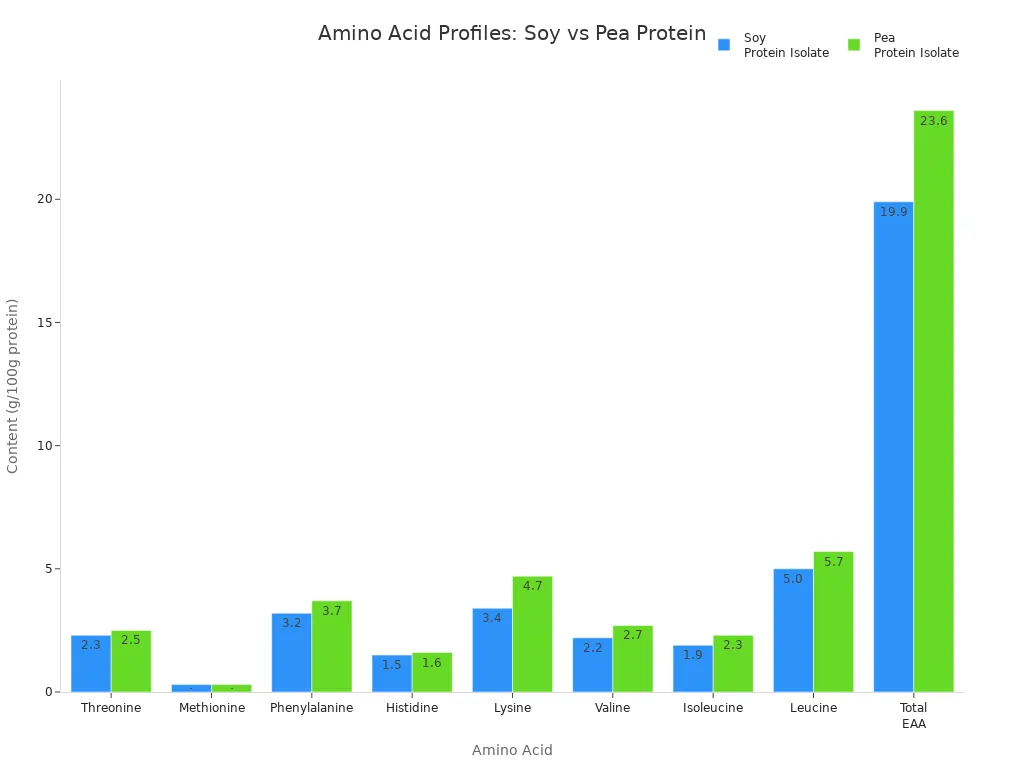
Your body can use both protein powders easily. Soy protein isolate has a PDCAAS of 1.0. This means your body uses it very well. Pea protein is also easy to digest. Its PDCAAS is between 0.82 and 0.93. Both are good for your nutrition goals.
If you have allergies, you need to be careful. Soy protein isolate can cause allergies in some people. If you are allergic to soy, do not use it. Pea protein is hypoallergenic. It almost never causes problems. Many people with food allergies choose pea protein.
Soy protein isolate has things that act like estrogen in your body. Some people worry about this. Pea protein does not have these things. It is safer if you want to avoid hormone changes.
Soy protein isolate might change your hormones.
Pea protein does not change hormones.
You want your protein powder to taste good and mix well. Soy protein isolate is smooth and has a mild taste. Pea protein can taste earthy or nutty. Many brands make the flavor better. Both mix well in shakes and recipes.
You may care about the planet when picking protein powder. Both soy and pea protein are better for the earth than animal proteins. Pea protein uses less water and land. Soy farming can cause deforestation and uses more water. Most soybeans are grown for animal feed. Plant-based protein powders help the environment.
Both are better for the earth than animal proteins.
Pea protein is best because it uses less water and land.
You need a plant-based protein to help your workouts. It should help your muscles grow. Experts say you should check how much protein is in each scoop. Try to find powders with 20 to 30 grams of protein per serving. Make sure the powder is made in safe, certified places. Look for short ingredient lists. Stay away from added sugars and fillers. Pick a flavor you like so you will use it often. Xinrui Group’s soy protein isolate gives you lots of protein and all the amino acids you need. It is a good choice for your fitness goals and is a plant-based option you can trust.
Pick protein powders that are tested by other companies for safety.
Choose ones with 20–30 grams of protein in each serving.
Do not pick powders with extra fillers or allergens.
Pick a flavor you enjoy so you will use it often.
Your food needs help you pick the right protein. Pea protein is a good choice if you have allergies. It does not have any of the nine main food allergens. Soy protein is a common allergen and may not be good if you are sensitive. Some people do not use soy protein because it might change hormone levels. Pea protein is safe for most people and does not cause allergies. If you want non-GMO protein, Xinrui Group’s soy protein isolate is a good pick.
Pea protein is safe for most people and does not cause allergies.
Soy protein can cause allergies and might change hormones.
Pick non-GMO plant proteins for clean and safe nutrition.
Taste and texture are important when you pick a protein powder. Pea protein tastes earthy and can feel gritty. Soy protein isolate has a mild taste and mixes well. You might like soy protein if you want a plain taste in shakes or recipes. Pea protein is better in savory foods or with strong flavors. It is important to pick a powder that mixes well.
Soy protein isolate tastes mild and mixes smoothly.
Pick the one that fits your taste and recipes.
You might care about the planet when picking protein. Pea protein uses less water and fertilizer. It helps the soil and is better for the earth. Soy protein can cause forests to be cut down and uses more water. Non-GMO soy protein, like Xinrui Group’s, is better for the environment.
Aspect | Pea Protein | Soy Protein |
|---|---|---|
Water Usage | Uses more water | |
Genetic Modification | Not genetically modified | Often genetically modified |
Environmental Impact | Helps the soil | Can cause deforestation |
Tip: Think about your fitness, food needs, taste, and the planet. You can find good plant-based protein powders that fit your life.
There are lots of protein powders you can pick from. Both soy and pea protein powders help your muscles grow. Pea protein has more leucine and important amino acids. If you have allergies or a sensitive stomach, pea protein is gentle and easy to digest. Soy protein powder gives you all the amino acids you need and costs less. Always think about your health, what tastes good, and how much you want to spend. Xinrui Group makes plant-based protein powders you can trust. Try both kinds to see which one works best for your life.
Soy protein isolate has more protein in each serving. It gives you all the amino acids your body needs. Pea protein is gentle on your stomach and does not cause allergies. You can pick one based on what your body needs and what you like.
Yes, you can use it if you are vegan. Soy protein isolate is made from non-GMO soybeans. It does not have any animal products. It works for both vegan and vegetarian diets. You can put it in shakes, baked foods, or plant-based meals.
Pea protein is safe for most people with food allergies. It does not have dairy, soy, gluten, or nuts. Always read the label to make sure there is no cross-contamination.
You can add Xinrui Group soy protein isolate to smoothies or baked foods. It mixes in well and makes foods smoother. You can also use it in vegetarian meals and healthy drinks.

 English
 简体中文
简体中文