Views: 0 Author: Site Editor Publish Time: 2026-05-08 Origin: Site


You want to pick the best plant-based protein for you. Xinrui Group has soy protein isolate and vital wheat gluten. Each one is good for different things. Nutrition, health, and how you use them are important. You should think about what you like to eat. You should also think about how you will use these proteins in your food.
Vital wheat gluten helps make foods chewy. It is used in baked goods and meat substitutes. Many vegans and vegetarians like it.
Soy protein isolate has more protein and fewer calories. It is good for people who want more protein but not more carbs.
Both proteins are non-GMO and work in many diets. Watch out for allergies. Vital wheat gluten has gluten. Soy protein isolate can cause soy allergies.
Think about what you want to cook. Use soy protein to keep drinks and meat alternatives moist. Use vital wheat gluten to make bread and noodles stretchy.
Always read labels for allergens and certifications. This helps you pick foods that fit your diet and health needs.
Vital wheat gluten is a strong plant-based protein. It comes from wheat flour. It has about 75-80% protein. You can find it in bread, noodles, and meat substitutes. When you mix it with dough, it makes the dough chewy and stretchy. People who are vegetarian or vegan like vital wheat gluten. It helps make foods that feel like meat. You can also use it to make baked goods better. Vital wheat gluten is non-GMO and works for many diets.
Soy protein powder is a popular plant-based protein. It comes from non-GMO soybeans. Soy protein powder has at least 90% protein. You can use it in sausages, meatballs, vegetarian foods, and drinks. Food makers use soy protein powder to add more protein and improve texture. Soy protein powder helps foods keep moisture and oil. You can use soy protein powder in lots of recipes. Many people like it for a high-protein, plant-based diet. Soy protein powder is safe, high-quality, and follows strict food rules.
Xinrui Group offers both vital wheat gluten and soy protein powder. These products are non-GMO, high in protein, and very useful. You can use them in food, drinks, and aquafeed. Xinrui Group’s vital wheat gluten and soy protein powder help make foods with better texture and nutrition. You can trust Xinrui Group because their products have important certifications.
Certification Type | Description |
|---|---|
Kosher | Certified for following Jewish food rules. |
Halal | Certified for following Islamic food rules. |
Non-GMO | Certified to show no genetically changed organisms are used. |
Xinrui Group gives you safe and good quality plant protein solutions. Their products fit many needs.
You might wonder how much protein is in each one. Vital wheat gluten and soy protein isolate both have a lot of protein. The table below shows how much protein is in each.
Product | |
|---|---|
75-80 | |
Soy Protein Isolate | 90 |
Soy protein isolate has the most protein in each serving. Vital wheat gluten also gives you a lot of protein. If you want more protein for vegan meals or building muscle, both are good. You can add them to recipes that need more protein. Many companies use these proteins to make plant-based foods healthier.
It is smart to check calories and other nutrients before you pick. The table below shows calories, fat, carbs, and other things for both.
Nutrient | Vital Wheat Gluten (per 100g) | Soy Protein Isolate (per 100g) |
|---|---|---|
Calories | 200 | |
Total Fat | 1.85g | 2g |
Saturated Fat | 0.272g | 0.25g |
Total Carbohydrate | 13.79g | 0g |
Sugars | 0g | 0g |
Dietary Fiber | 0.6g | 0g |
Protein | 75.16g | 52.7g |
Soy protein isolate has fewer calories than vital wheat gluten. It also has almost no carbs. Vital wheat gluten has a little bit of carbs and fiber. Both have low fat. If you want less calories and carbs, pick soy protein isolate. If you want some fiber, vital wheat gluten is a good choice.
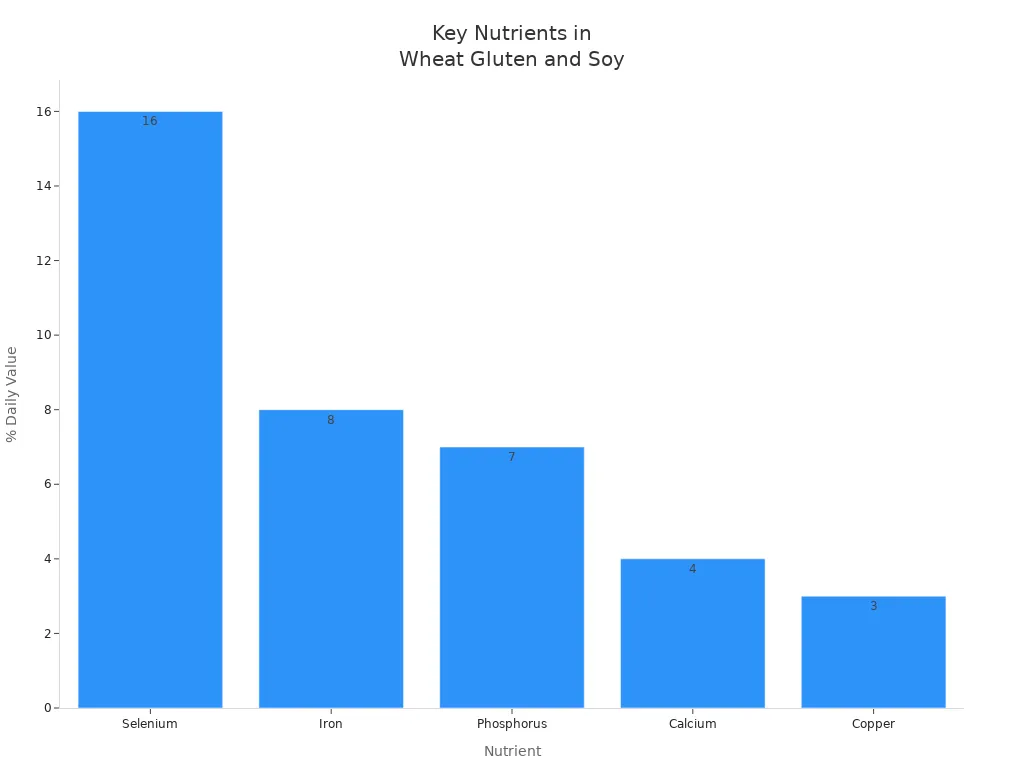
Your body needs vitamins and minerals to stay healthy. Both vital wheat gluten and soy protein isolate have important nutrients. The table below shows the main vitamins and minerals in these proteins.
Nutrient | Amount (% of DV) |
|---|---|
Selenium | 16% |
Iron | 8% |
Phosphorus | 7% |
Calcium | 4% |
Copper | 3% |
You get selenium, iron, phosphorus, calcium, and copper from these proteins. These nutrients help your body work well. The chart below shows how much you get from each.
You can use vital wheat gluten or soy protein isolate to get more nutrients in your vegan diet. Both help you get enough protein, vitamins, and minerals. Pick the one that matches your diet and health needs.
When you pick a plant-based protein, think about how your body handles it. You should also think about allergies. Most people can digest vital wheat gluten and soy protein isolate easily. But some people are allergic to wheat or soy. These allergies can be mild or very serious.
Here is a table that lists common allergens and how often they happen:
Allergen Type | Prevalence Rate | Notes |
|---|---|---|
Wheat Allergy | N/A | Common food allergy; can cause severe reactions. |
Soy Allergy | Up to 0.5% | Most common in infants; often outgrown. |
Celiac Disease | N/A | Requires strict gluten avoidance. |
If you are allergic to soy, you might get an itchy mouth or a rash. You could also have a runny nose or trouble breathing. Sometimes, soy can cause a very bad reaction called anaphylaxis. Wheat allergies can also be strong. Always talk to your doctor if you are worried.
Some people do not have allergies but have sensitivities. Gluten sensitivity affects up to 6% of people in the United States. In other countries, it affects between 0.7% and 2.9% of people. If you have celiac disease, you must not eat gluten. This means you cannot have vital wheat gluten. Doctors say to avoid foods like seitan and other foods with gluten if you have gluten sensitivity or celiac disease. About 0.5% of people are allergic to soy, but many kids outgrow it. If you are allergic to soy, do not eat soy protein isolate or other soy foods.
Tip: Always check food labels and talk to your doctor if you have food sensitivities or allergies.
Plant-based proteins can be good for your health. Studies show that vital wheat gluten and soy protein isolate can help you feel full. They can also help keep your cholesterol healthy and help your body keep calcium. Some research says these proteins can lower bad cholesterol and help your body use insulin better. Xinrui Group’s non-GMO products give you high-quality protein. These proteins are good for your health and fit many diets.
Study | Findings | Health Benefits |
|---|---|---|
Jenkins et al. (2003) | High protein intake did not harm calcium balance | Calcium balance |
Jenkins et al. (2001) | Lowered oxidized LDL and triglycerides | Lipid profile |
Stoeger et al. (2019) | Helped reduce calorie intake by increasing fullness | Satiety |
Claessens et al. (2009) | Improved insulin and glucagon levels | Insulin response |
You can trust Xinrui Group to care about quality and safety. Their plant-based proteins help you reach your nutrition goals and support your health.
You may follow a vegan or vegetarian diet for health, ethical, or environmental reasons. Plant proteins play a big role in these diets. You can use many types of plant proteins to replace animal products. Seitan, which comes from vital wheat gluten, is a popular choice because it has a texture like meat. Many restaurants use seitan in dishes for people who want meat substitutes. Soy protein isolate is another top pick. It gives you a lot of protein and works well in foods like veggie burgers, sausages, and drinks. You should always check labels if you have allergies or want to avoid extra sodium or fat.
You need to read ingredient lists if you have allergies to nuts or soy.
You should look for products that fit your diet, especially if you want to avoid gluten or soy.
Some people need to avoid gluten because of celiac disease or gluten sensitivity. You must pay close attention to food labels. Many foods can have hidden sources of gluten. The Codex Standard and food labeling laws help protect you. They require companies to list top allergens, including wheat and soy, on packages.
If you have celiac disease or gluten sensitivity, always check the label for gluten-free certification. This helps you avoid foods that can cause problems.
Soy protein isolate can fit into a gluten-free diet if the product is certified gluten-free. You should always check for cross-contamination risks.
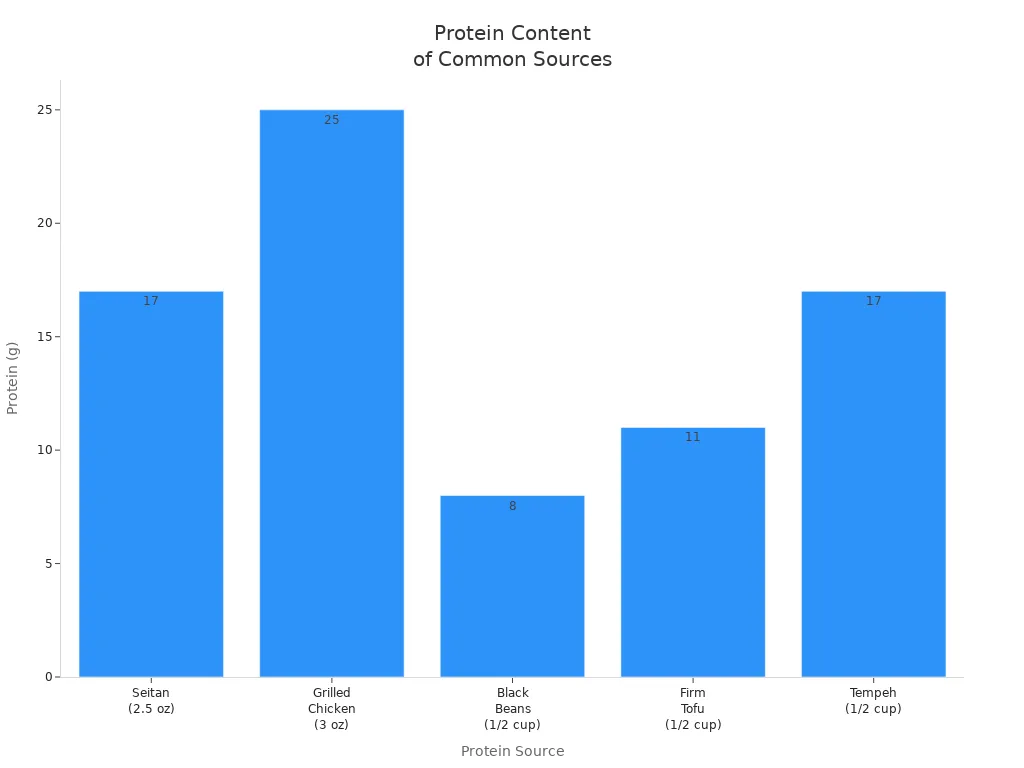
You may want more protein for muscle building or sports. Plant proteins can help you reach your goals. Soy protein isolate gives you a high amount of protein with few calories. Seitan, made from vital wheat gluten, also gives you a lot of protein and iron. You can see how plant proteins compare to other foods in the table below.
Protein Source | Calories | Protein (g) | Iron (% DV) | Fat (g) | Carbohydrates (g) |
|---|---|---|---|---|---|
Seitan (2.5 oz) | 90 | 17 | 45 | 1 | 4 |
Grilled Chicken (3 oz) | 150 | 25 | 2 | 5 | 0 |
Black Beans (1/2 cup) | 113 | 8 | 20 | 0.5 | 20 |
Firm Tofu (1/2 cup) | 98 | 11 | 11 | 5 | 3 |
Tempeh (1/2 cup) | 160 | 17 | 12 | 9 | 8 |
You can choose plant proteins to match your diet and health needs. These proteins help you build muscle, stay full, and support your body every day.
You want your plant-based foods to taste good. Vital wheat gluten and soy protein isolate help with this. Vital wheat gluten makes dough stretchy and chewy. Soy protein isolate keeps food moist and soft. When you mix soy protein and wheat gluten, you copy the feel and look of red meat. This mix works well in fake meats and baked foods.
Protein Combination | Effect on Texture and Functionality |
|---|---|
Soy Protein + Wheat Gluten | Mimics characteristics of red meat, enhances texture, color, flavor |
You can use these proteins to make burgers and sausages. They also help you make vegan deli slices and mock roast pork. Your plant-based meals look nice and taste good.
Food makers use vital wheat gluten and soy protein isolate in many foods. You see these proteins in pasta, meat, dairy-free drinks, and baked goods. They make foods feel better and add more protein. They also help foods hold water and oil and get thick.
Protein enhancement
Viscosity building
Water and oil management
Gelling properties
People like soy and want healthier foods. This helps new products grow. Soy protein is in many new foods. Vital wheat gluten makes pasta and meat taste and feel better.
Xinrui Group helps you use plant proteins in many ways. You can add soy protein isolate to sausages and vegetarian foods. You make drinks and dairy alternatives healthier and tastier. Vital wheat gluten works in bakery foods, pasta, and fish feed. It makes dough stick together and stretch well. It also helps fish feed work better.
Tip: You can ask Xinrui Group for help and special products. Their plant protein solutions fit your needs in food, drinks, and fish feed.
You pick Xinrui Group’s products to make your plant-based foods taste better and meet industry rules.
You want to help the planet when you pick plant proteins. Both vital wheat gluten and soy protein isolate are good choices for this. Xinrui Group uses only non-GMO wheat and soybeans. This means their products do not use genetically changed crops. Using non-GMO plants helps keep nature safe and supports natural farming.
You might wonder how these proteins affect the earth. Wheat and soybeans use land and water in different ways. The table below shows how much greenhouse gas and land each crop needs to make one kilogram of protein.
Crop | Environmental Metric | Vital Wheat Gluten (per Kg) | Soy Protein Isolate (per Kg) |
|---|---|---|---|
Cereals (wheat) | GHGe (kg CO2 eq.) | N/A | |
Cereals (wheat) | Land Use (m² annual) | 8.6 to 33.5 | N/A |
Legumes (soy) | GHGe (kg CO2 eq.) | N/A | 1.3 to 1.8 |
Legumes (soy) | Land Use (m² annual) | N/A | 5.8 to 34.7 |
Both wheat and soybeans use less land than animal protein. They also make less greenhouse gas. Soy protein isolate often makes even less greenhouse gas for each kilogram. Vital wheat gluten can use less land, but it depends on how it is grown. Picking either protein helps you make a smaller carbon footprint.
When you choose non-GMO plant proteins, you help the planet and make food safer.
Xinrui Group cares about the earth and the future. Their products are made to protect the environment. Xinrui Group uses smart ways to save energy and make less waste. They work with local farmers who use good farming methods. You can trust their products are always non-GMO.
Xinrui Group wants to make good food and keep the earth safe. When you pick their plant proteins, you support clean food and a better world. You help change the food industry by choosing non-GMO and earth-friendly options.
You want to pick the best protein for your food. Comparing them helps you see what is different and what is the same. The table below shows how soy protein isolate and vital wheat gluten compare.
Feature | Soy Protein Isolate | Vital Wheat Gluten |
|---|---|---|
Protein Content | Minimum 90% | 75-80% |
Source | Non-GMO Soybeans | Non-GMO Wheat |
Calories (per 100g) | 200 | 370 |
Carbohydrates (per 100g) | 0 | 13.79 |
Fat (per 100g) | 2g | 1.85g |
Fiber (per 100g) | 0g | 0.6g |
Texture Functionality | Moisture retention, soft | Chewy, elastic |
Common Uses | Sausages, meatballs, drinks | Bread, noodles, meat substitutes |
Allergen Risk | Soy allergy | Wheat allergy, gluten sensitivity |
Diet Suitability | Vegan, vegetarian, gluten-free* | Vegan, vegetarian |
Environmental Impact | Low GHGe, low land use | Low GHGe, low land use |
Certifications | Kosher, Halal, Non-GMO | Kosher, Halal, Non-GMO |
*Soy protein isolate can be gluten-free if certified.
Note: Always read labels for allergens. Ask your doctor if you have food allergies.
Soy protein isolate has more protein and fewer calories. It also has no carbs. You can use it in many foods and drinks. Vital wheat gluten gives food a chewy feel. It is good for baking and making foods like bread. Both proteins help you eat healthy and reach your nutrition goals.
If you want food that feels like meat, you can mix both proteins. This makes your food taste better and look nice. Use soy protein isolate for more protein. Use vital wheat gluten for a chewy texture. Xinrui Group gives you safe, non-GMO proteins for your kitchen or business.
Tip: Look at this table when you choose. Pick the protein that fits your health, diet, and cooking needs.
You should think about what you want to eat. You also need to think about your nutrition goals. Soy protein isolate has more protein and less calories. It is good for drinks and fake meats. Vital wheat gluten is great for baking and making food chewy. Xinrui Group sells safe, non-GMO plant proteins. You can ask Xinrui Group for help and good products.
Vital wheat gluten comes from wheat. It makes food chewy. Soy protein isolate comes from soybeans. It has more protein and fewer calories. You can use both in plant-based foods. Pick the one that fits your needs.
Yes, you can use soy protein isolate in gluten-free recipes. Always check the label for gluten-free certification. This helps you avoid gluten and keeps your food safe.
Vital wheat gluten works for vegan diets. It is a plant-based protein. You can use it in meat substitutes like seitan. Many vegans like it for its texture and protein.
Keep both products in a cool, dry place. Use airtight containers to keep them fresh. Keep them away from moisture and heat to make them last longer.
You can contact Xinrui Group on their official website. They give support and product information for food, drinks, and aquafeed.

 English
 简体中文
简体中文